Anne Frank and the Enchanting Pull of a Nation’s Literary Heritage
A personal reflection on how Anne Frank’s diary — and reading for the joy of it as a child — grew into a dream of standing before the secret annex in Amsterdam.
This piece belongs to a series of 100 posts written in memory of Thom's grandmother, published on her Facebook.
When you read those lists of the greatest autobiographies or must-read books of all time, you have almost certainly come across The Diary of Anne Frank, by a young girl named Anne Frank. Years ago, when I first heard those lists, I felt not the slightest spark of curiosity for non-fiction or fiction memoirs whose logic and historical setting felt so distant from anything I understood at the time. And then, after reading many times from many different sources — and especially the foundational history books on the Epic! app — my worldview shifted, above all toward the new lands I would one day come to visit.
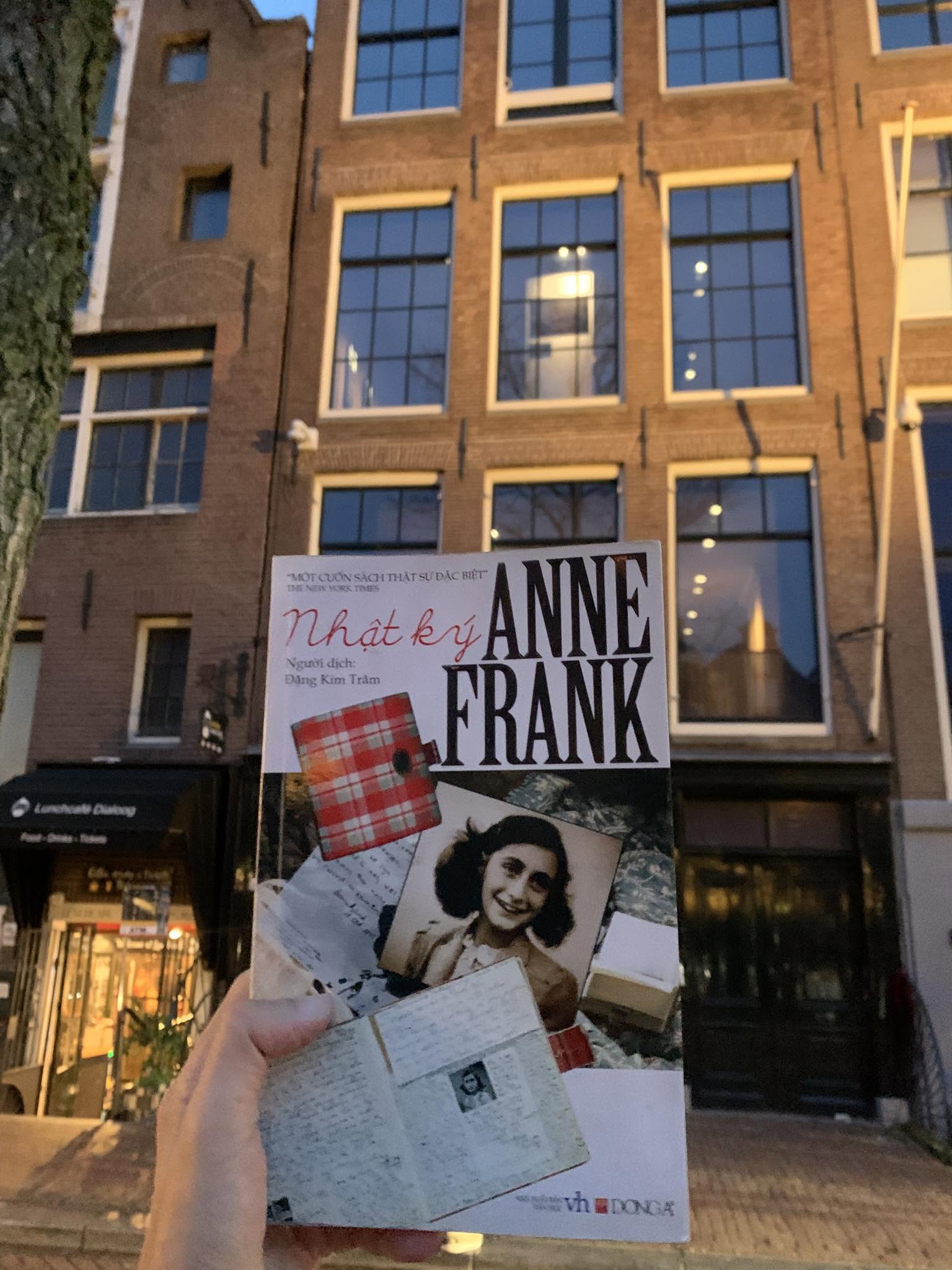
The book about Anne Frank is one of those. You can seek out the simplest books about Anne on Epic! before you ever begin reading her diary, and you will come to treasure it — and perhaps begin to nurture a dream: that one day you will visit Anne Frank’s secret annex, in Amsterdam, the Netherlands. Imagine if we could nurture dreams like this together with the children around us.
Before I came to know Anne Frank more fully, I watched Freedom Writers, a film based on a true story about a teacher in the United States. Set in a classroom overflowing with violence and rebellion, the teacher, Ms. Erin Gruwell, asked her students to read The Diary of Anne Frank, and invited Ms. Miep Gies — one of the few survivors connected to the Holocaust, and one of the people who helped Anne Frank’s family during the time they were in hiding — to travel from Amsterdam, the Netherlands, all the way to the United States to meet her students. And that became a turning point that changed how those students saw everyday heroes and the violence unfolding around them.
And this film made my longing to go to Amsterdam stronger than ever.
Though Anne Frank had to hide in the secret annex for two years, she was still fortunate to have a small radio to follow the news, a disciplined daily rhythm of study, living, and reading (with the books mostly brought to her by Ms. Miep Gies), along with some eight years of kindergarten and primary school at very good schools in Amsterdam — all of which produced a diary that would go on to become a great literary heritage for the Netherlands, drawing a steady stream of visitors that, I believe, will continue for centuries to come.
And that, to me, is the most enduring beauty of reading and learning for the joy of it in the days of childhood.
A photo I took in front of the building where Anne and her family hid, at 263 Prinsengracht, Amsterdam, the Netherlands, December 2025.