This piece belongs to a series of 100 posts written in memory of Thom's grandmother, published on her Facebook.
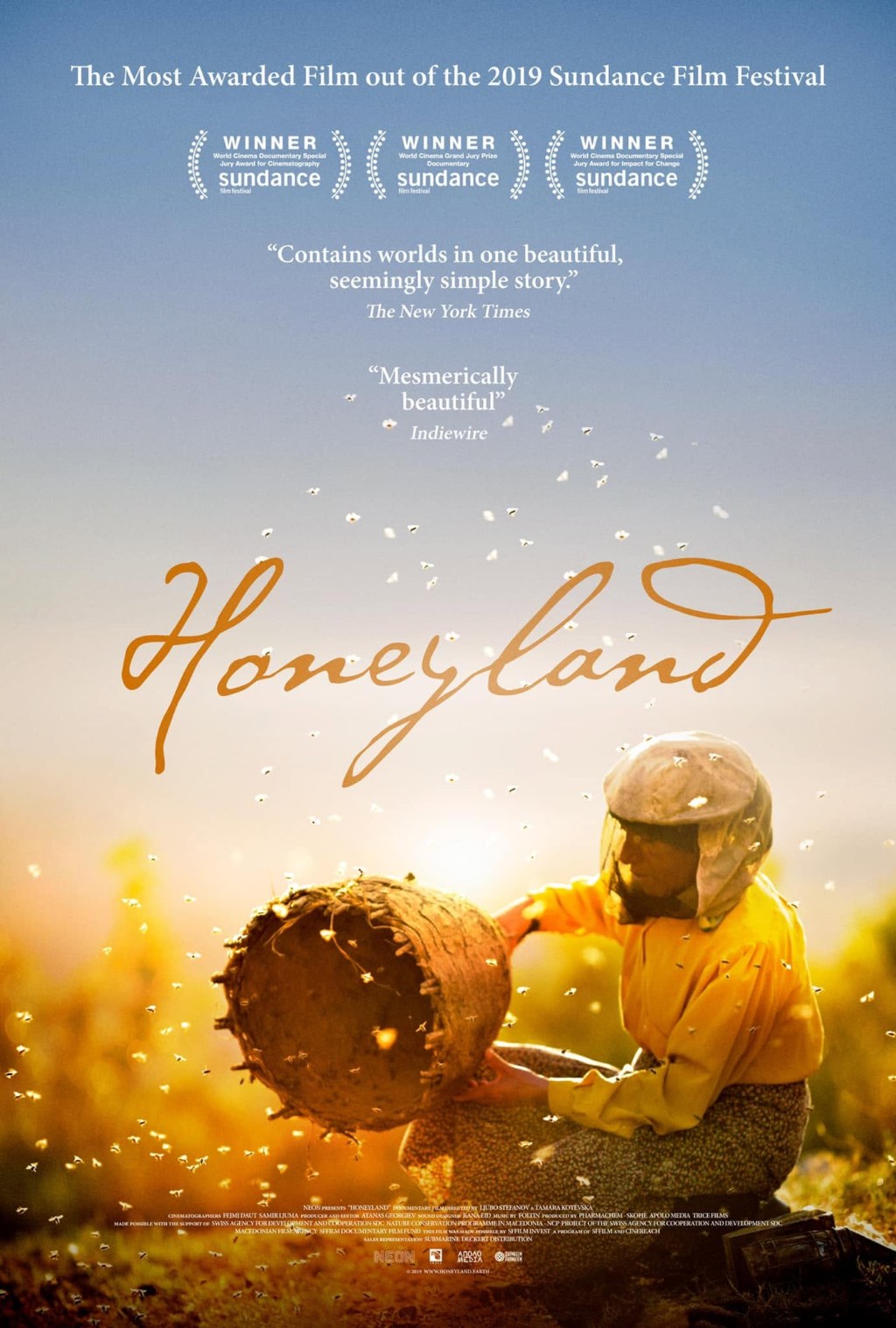
“Honeyland” (2019) is one of the most important documentaries I know.
The film is about Hatidže (in the Republic of North Macedonia), the last of Europe’s wild beekeepers and honey hunters. She lives with her old mother, who is paralysed and blind in one eye, in a small house built of stone, with no electricity and no running water, almost cut off from the town outside. Her principle in taking honey is always to take only half; with the other half the bees still have food for the winter and can go on making honey in the seasons to come.
Her life is very peaceful until a nomadic family with a great many children and a great deal of livestock moves in near where Hatidže lives. Hatidže is gentle and friendly; she teaches the family and the children how to keep bees and how to hunt for honey. At first they keep to her principles, but after a time they take all the honey there is, from the hives and from the wild, across the whole area. The plant ecosystem is broken, and almost all the livestock they had brought from elsewhere dies off one by one.
And the reason this film achieved something unheard of in the history of the Oscars is that everything that happens in it is real, apart from a few shots reconstructed later, such as the nomadic family’s first arrival in the area. The crew had at first planned only a short film recording the landscape around the river Bregalnica, but its focus changed when the directors met Hatidže. The film was shot over three years (beginning in 2015), and the final version was condensed from more than 400 hours of footage! WOW! Because the place where Hatidže lives is so remote, the crew stayed there for three to four days at a stretch before going to the nearby towns for supplies and to recharge their equipment. They slept in tents and hammocks in front of Hatidže’s house. The production involved a crew of six: two directors, two directors of photography, an editor and a sound engineer.
The most important thing the film taught me:
SUSTAINABLE DEVELOPMENT is meeting the needs of the present without harming the ability of future generations to meet their own