This piece belongs to a series of 100 posts written in memory of Thom's grandmother, published on her Facebook.
“At the start nobody is good straight away, because nobody knows how
So you look at the good people around you, see what they do, and do the same”
(from the song Nấu ăn cho em)
For me, the idea of washing up divides into two periods: before and after the summer I turned 12, hehe.
The first thing in my life that made me love washing up was watching my cousin, chị Thu, do it. In my memory she tips all the bowls into a basin, runs the water, and washes so gently and yet so quickly and so neatly. Thinking back on it later — why do we remember small things like that? — ah, it turns out that anything we do with attention, and hold in regard as a rite, stays with us always.
And here is the section “Washing the dishes” from Thích Nhất Hạnh’s book An lạc từng bước chân (Peace Is Every Step).
“We often think that washing the dishes is not interesting; in fact, when we stand before the sink, roll up our sleeves and put our hands into the warm water, we find that washing the dishes is pleasant and restful. I like to take my time over each dish, unhurried and careful, attending to the dish, to the water, to every movement of my hands. If I wash the dishes in a rush so as to get quickly to the dessert, then the time spent washing them becomes useless and wasted. That is a pity, because every second and every minute of life is a wonder. That the dishes are here at all is a wonder, and that I am standing here washing them is a wonder too.
“If I have no capacity for happiness while I am washing the dishes, if I only want to be done so that I can go and eat the dessert, then I certainly have no capacity to enjoy that dessert either. Because while I am eating it I will be thinking of this and that, and the pleasure of eating something fragrant and good will fly away. I am always being pushed forward by this plan and that scheme, and I never know how to live for the present moment. In the light of mindfulness, every thought and every act becomes sacred, and there is no longer any border between the holy and the ordinary. I often spend a long time washing the dishes, and yet because I live fully for every moment I am happy the whole time. Washing the dishes is both the end and the means, because we do not wash the dishes only in order to have clean dishes. We wash the dishes in order to wash the dishes, and so while we are washing them we do not lose a single moment of living fully.”
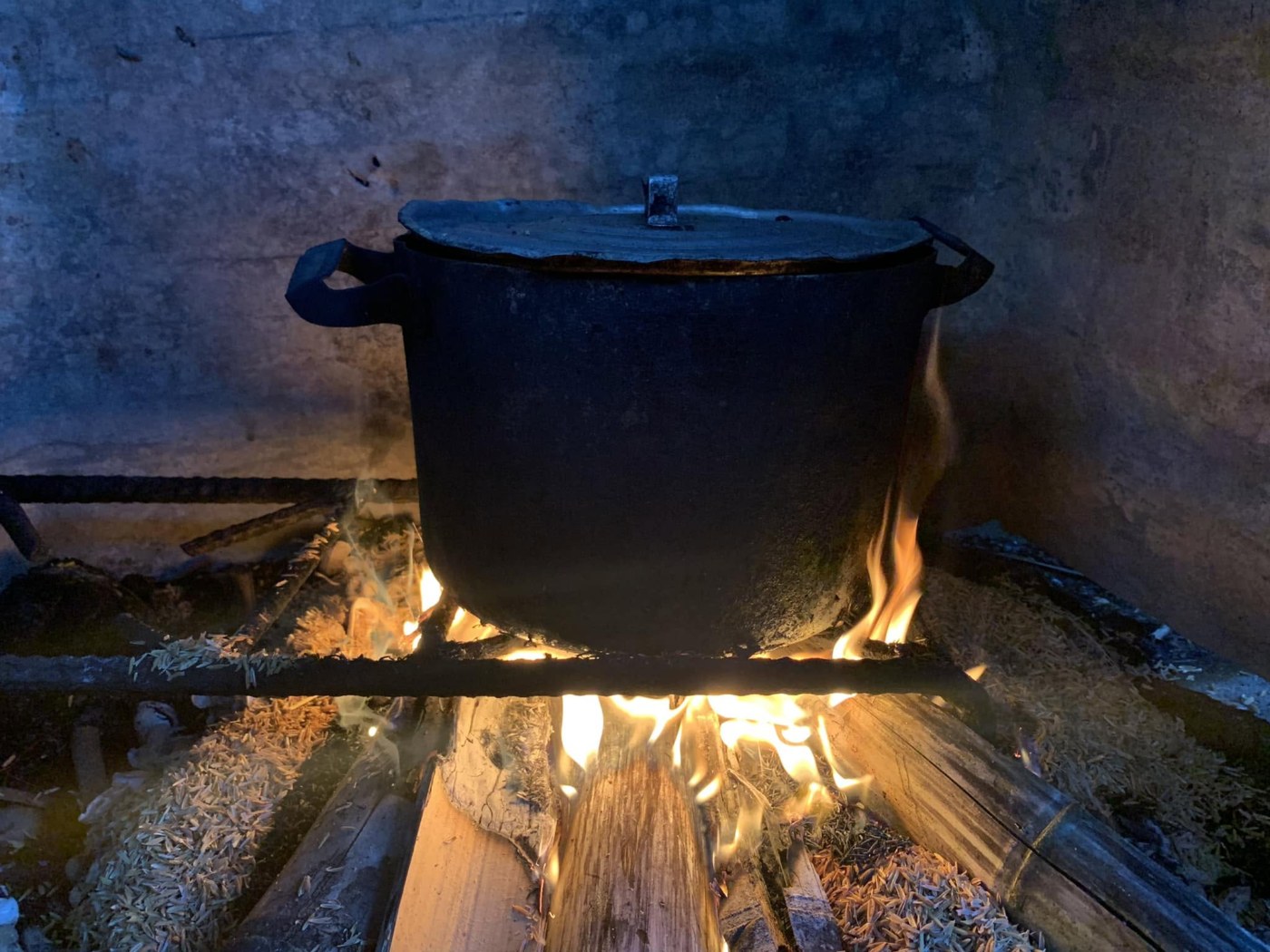
I do not have a single photograph of anyone washing up, so let me post one of corn being boiled instead — we would eat the corn, and grandma always drank the water it was boiled in.
The pot of corn boiling over the wood fire at grandma’s house.