A new word begins as an unfamiliar noise and can become something you simply know. The journey of a word through the brain — a fast hippocampal capture, a distributed network, and consolidation in sleep — and how to make words stick.
You are reading, and you hit a word you do not know — say a Vietnamese learner meets the English word gorgeous. A moment ago it was just an unfamiliar noise on the page. Somehow, over the coming days, it can become a word you simply know — one you recognise instantly and use without thinking. What happens inside your head to make that transformation? The journey of a new word through the brain is a small marvel, and tracing it tells you exactly how to make words stick.
First contact: a fast, fragile capture
When the word arrives, your brain first processes its raw form — the pattern of sound in the auditory cortex, the shape of the letters in the visual system. Then a small, deep structure called the hippocampus does something clever: it grabs the new word almost instantly, binding its sound, spelling, and the gist of its meaning into a single quick memory. This is fast mapping, and it is why you can repeat a brand-new word seconds after hearing it. But this first capture is fragile. Held only in the hippocampus, the word is a temporary sketch — easily lost by tomorrow if nothing more happens.
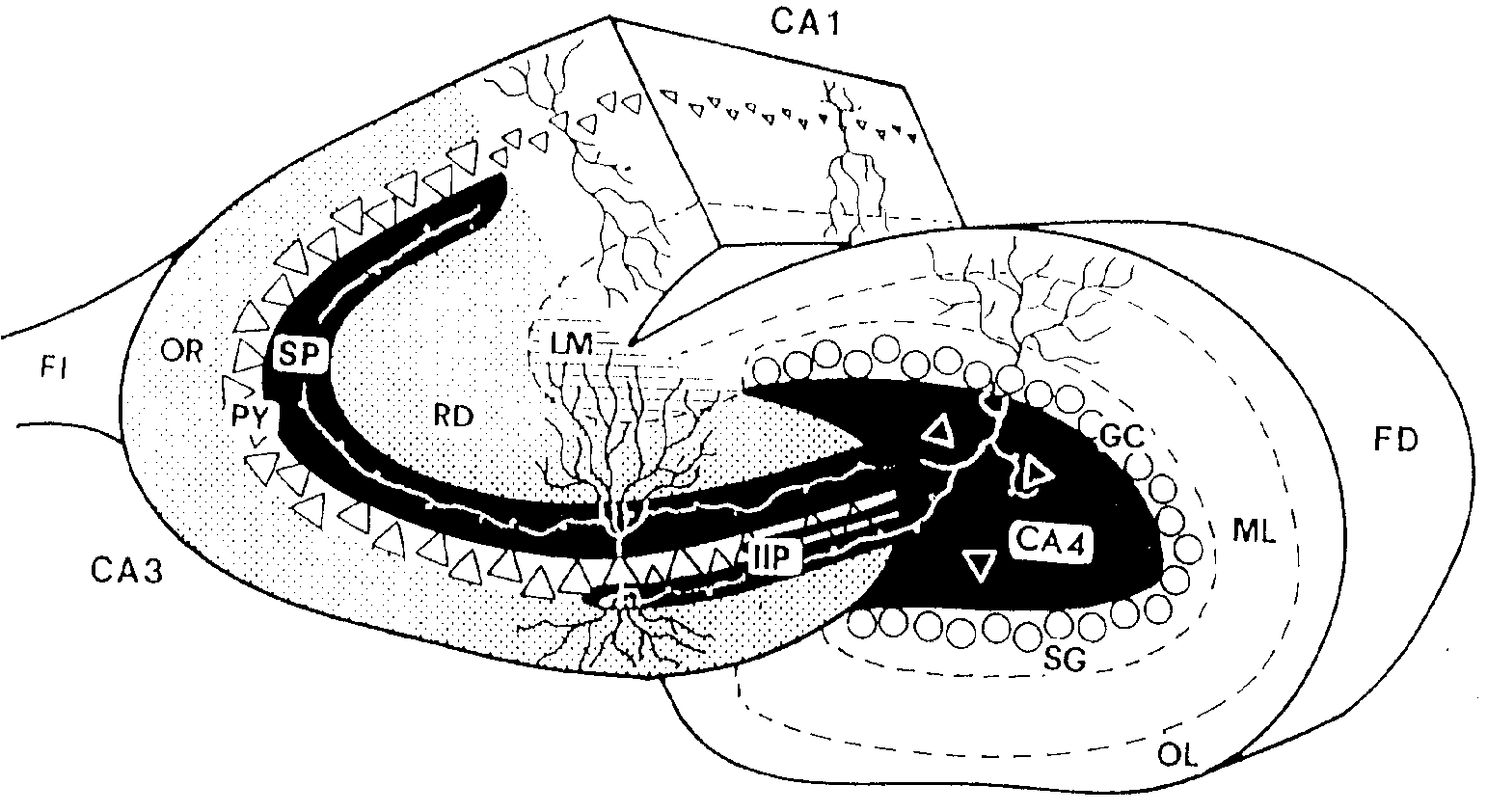
A stained slice of the hippocampus. A new word is not filed here so much as held — the long move into permanent storage happens later, and mostly while you are asleep.Source: See source. — CC BY 2.0, Wikimedia Commons
A word is not stored in one place
Here is the first surprise: a word you know is not filed in a single spot, like a book on a shelf. It lives as a network spread across the brain. Its sound sits in regions that handle hearing; its written form in areas for reading; its meaning in a web of connections that can stretch to surprising places. When you learn kick, parts of your motor cortex — the areas that move your legs — quietly light up. A word is bound to sensations, actions, images, and, above all, to other words. To store a word is really to weave a set of connections. The more threads, the more securely it is held.
From fragile to permanent: the night shift
So how does a shaky first impression become a permanent word? Through a handoff between two memory systems. The hippocampus learns fast but cannot hold everything for long; the neocortex — home of your lifelong mental dictionary — learns slowly but stores for years. Bridging the two takes time and, especially, sleep. As you sleep, the brain replays the day's new words, gradually transferring them from the hippocampus into the cortical lexicon and knitting them into what you already know.
The evidence for this is striking. A newly learned word does not immediately behave like a real word — it only begins to compete with similar-sounding words you already know (the way gorgeous might tangle briefly with gorge) after a night's sleep. Consolidation, much of it nocturnal, is the moment a new word truly joins the club.
Repetition wires it in
Every time you meet or recall the word, the connections that represent it fire together — and connections that fire together grow stronger. This is the basic rule of learning in the brain, often summed up as neurons that fire together, wire together. A single exposure lays a faint trail; repeated, spaced encounters deepen it into a well-worn path. And crucially, retrieving a word — pulling it out of memory rather than just seeing it again — strengthens those connections more than passive review. Without reactivation the trail fades; with it, the word becomes permanent.
Meaning multiplies the hooks
Because a word is a web of connections, the richer the web, the easier it is to find. A word learned as a bare label — gorgeous = đẹp — has one thin thread. The same word met inside a vivid sentence, tied to an image, linked to beautiful and stunning, and used to describe something you actually care about, has many. Each connection is another route your brain can travel to reach the word. This is why words learned in context and with meaning outlast words crammed from a list.
How to help your brain store a word
Meet it several times, spaced out. Repetition builds the pathway; spacing (a review app is ideal) times each encounter to do the most good.
Sleep after learning. The handoff to permanent storage happens largely at night — new words you sleep on are the ones that last.
Learn it with meaning and context. Attach an image, a sentence, and related words. Every hook is another way back to it.
Test yourself. Recall the word from memory before checking — retrieval wires it in far more than rereading.
Use it. Producing the word in your own speech or writing binds it in even harder.
The takeaway
A word you know is not a fact you downloaded; it is a small network your brain built, thread by thread, over several days — captured in an instant, consolidated in your sleep, and strengthened every time you use it. You cannot force that process, but you can feed it: repetition, sleep, meaning, and retrieval are exactly what the brain needs to turn an unfamiliar noise into a word that is truly yours.
Read the simple version
The same article, told in plain words — for younger readers, or for anyone who wants the point quickly.
You are reading and you hit a word you do not know — say gorgeous. A moment ago it was an unfamiliar noise on the page. Somewhere in the next few days it can turn into a word you simply know.
Here is what happens in between.
First contact: caught fast, held loosely
Your brain first handles the raw shape of it — the sound, the letters. Then a small deep structure called the hippocampus does something clever: it grabs the whole thing almost instantly and ties the sound, the spelling and the rough meaning into one quick memory.
That is why you can repeat a brand-new word seconds after hearing it. But this first catch is fragile. It is a sketch, and by tomorrow it can be gone.
A word is not kept in one place
This is the surprising part. A word you know is not filed in one spot like a book on a shelf. It lives spread out across your brain.
Its sound sits where hearing is handled. Its written shape sits where reading is handled. Its meaning is a web of links reaching some odd places — when you learn kick, the part of your brain that moves your legs quietly lights up.
So storing a word really means weaving a set of connections. The more threads, the more securely it is held.
The night shift
How does a shaky first impression become permanent? By being handed from one memory system to another.
The hippocampus learns fast but cannot hold much for long. The cortex — where your lifelong dictionary lives — learns slowly but keeps things for years. Crossing between them takes time, and above all it takes sleep. While you sleep, your brain replays the day's new words and stitches them into what you already knew.
The evidence for this is oddly precise. A new word does not immediately behave like a real word. It only starts getting tangled up with similar-sounding words you already know — the way gorgeous might trip over gorge — after a night's sleep. That tangling is the sign it has joined the club.
Repetition lays the path
Every time you meet the word, the connections that hold it fire together — and connections that fire together grow stronger.
One meeting leaves a faint trail through grass. Repeated meetings, spread out over days, wear it into a path. And pulling the word out of memory does far more than seeing it again.
Meaning gives it more doors
Because a word is a web, the richer the web, the easier it is to find.
gorgeous = đẹp is one thin thread. The same word met inside a real sentence, tied to a picture, sitting next to beautiful and stunning, and used to describe something you actually care about, has many. Each link is another route your brain can take to get there.
That is why words learned in context outlive words crammed from a list.
So, to help it along
Meet it several times, spread out.
Sleep after learning. The handover to permanent storage happens largely at night.
Give it meaning. A picture, a sentence, some neighbours.
Test yourself. Recall it before you check.
Use it. Saying it yourself binds it hardest.
A word you know is not a fact you downloaded. It is a small network your brain built, thread by thread, over several days — caught in an instant, settled in your sleep, and strengthened every time you use it.
Sources & further reading
These articles summarize well-established research in learning science and linguistics. Key sources and further reading:
McClelland, J. L., McNaughton, B. L., & O'Reilly, R. C. (1995). Why there are complementary learning systems in the hippocampus and neocortex. Psychological Review.
Davis, M. H., & Gaskell, M. G. (2009). A complementary systems account of word learning: Neural and behavioural evidence. Philosophical Transactions of the Royal Society B.
Dumay, N., & Gaskell, M. G. (2007). Sleep-associated changes in the mental representation of spoken words. Psychological Science.
Pulvermüller, F. (2005). Brain mechanisms linking language and action. Nature Reviews Neuroscience.
Hebb, D. O. (1949). The Organization of Behavior: A Neuropsychological Theory. Wiley.