How to practise Chinese writing with almost no resources
Copying a character twenty times feels like diligent work and builds almost nothing, because the model sits on the page the whole time. Not once are you asked to recall it.
Copying a character twenty times feels like diligent work and builds almost nothing, because the model sits on the page the whole time. Not once are you asked to recall it.
Picture the scene, because nearly everyone learning Chinese has done it.
You have a page of squared boxes. You copy 謝 twenty times, filling one row, then another. Your hand aches. The page looks beautiful. It feels like serious study.
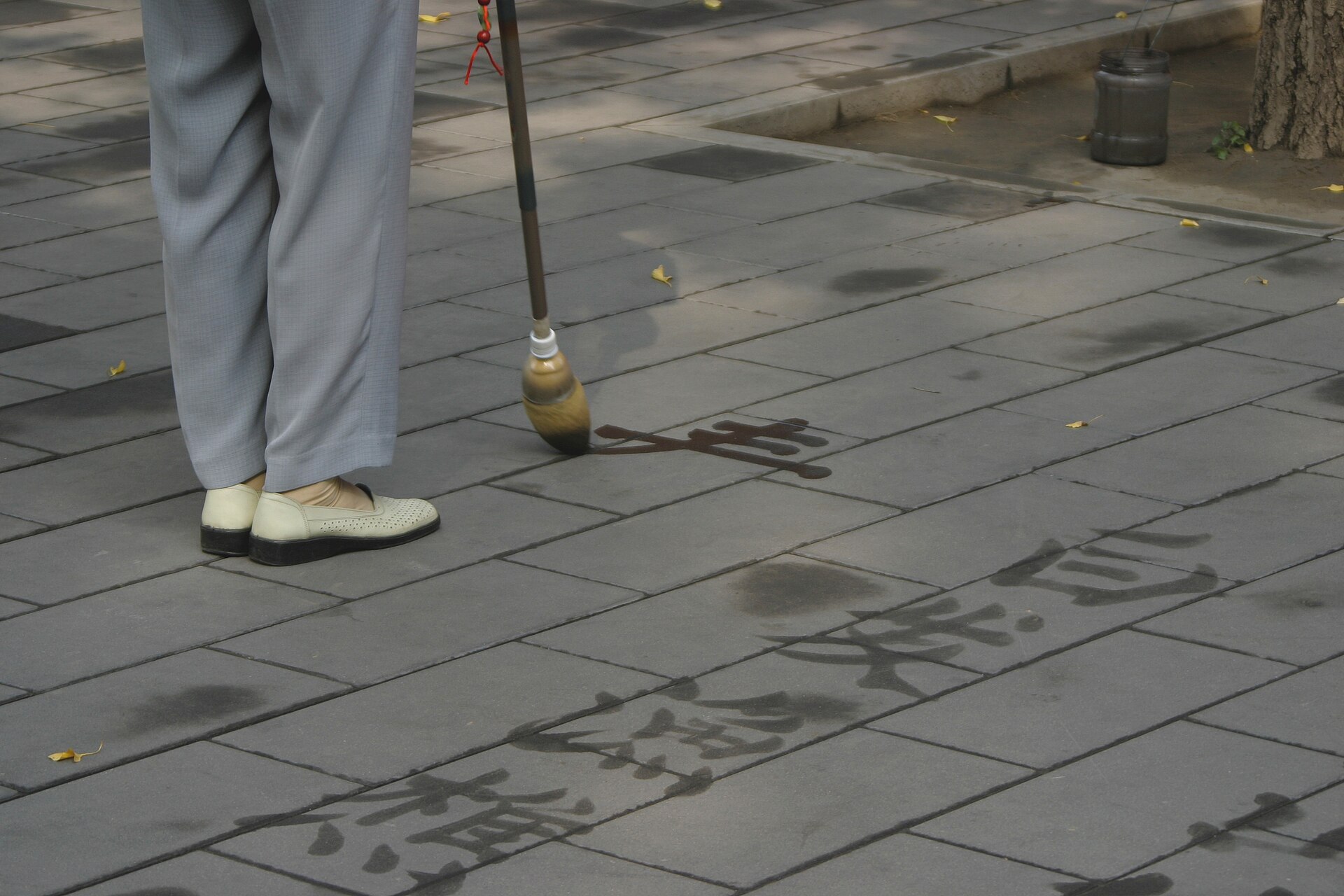
Three days later you need to write it, and it is gone.
The reason is not laziness or a bad memory. The reason is that across all twenty copies, the model was sitting right there on the page. Not once were you asked to recall it. You were transferring an image from eye to hand.
And here is the good news for anyone without much material: the only thing that actually builds writing ability is retrieval from a blank page — and retrieval is free.
The expensive part was never the part that worked.
Knowing a character is really two separate abilities:
Recognition — seeing 謝 and knowing it means thanks. Production — wanting to write thank you and rebuilding the character yourself out of nothing.
The second is far harder, and it can only be trained by doing it.
The clearest evidence comes from native speakers. 提笔忘字 — pick up the pen, forget the character, usually called character amnesia — describes educated Chinese readers who move through a newspaper fluently but cannot handwrite an ordinary word. The cause is pinyin input: every time you type, you rehearse the sound and never the shape.
What matters here: their reading is unaffected. Only handwriting erodes. The two skills come apart that cleanly.
An honest note: the phenomenon is very widely reported, but research reassessing the evidence argues its extent has been overstated in popular accounts. What is solid is the split between recognition and production; the scale is still argued over.
And the exam agrees. The HSK 3.0 standard separates its list of 认读字 (characters to recognise) from 书写字 (characters you must be able to handwrite). Two different columns, because they are two different jobs.
This has to be said straight, because the findings do not fall neatly on one side — they split by outcome.
Typing does better for character recognition and dictation: it strengthens the shape-to-sound link and lets you meet far more characters in the same amount of time.
Handwriting does better for meaning recognition, and above all for being able to produce the character — it strengthens the shape-to-meaning link and lays down a motor trace alongside it.
Tan et al. (2005) went as far as titling their paper Reading depends on writing, in Chinese: handwriting experience feeds into the quality of the orthographic representations used in reading itself.
The practical conclusion: if your goal is only to read, typing is efficient and you need not feel guilty about it. But this article is about writing. For that goal, handwriting is the work.
This is the biggest lever available, and it costs nothing.
Roughly 90% of Chinese characters are semantic-phonetic compounds — one part hinting at meaning, one at sound. About 80% consist of exactly two components.
So 好 is not six strokes to memorise. It is 女 + 子. 想 is 相 + 心. Once the components are familiar, you stop memorising pictures and start remembering assembly formulas.
The set you need is finite: roughly 200 to 300 components build thousands of characters. That is a list you can write out once and use for the rest of your life.
Do not learn stroke order character by character. Learn a handful of rules and apply them everywhere:
Those six lines replace looking up characters one at a time. Copy them onto the inside cover of your notebook.
This is the entire technique, and it costs nothing:
Only the second and third groups get written again. Leave the first alone until the next review.
The only difference from copying rows is step 2 — covering the model. But that step turns a copying exercise into a memory test. Roediger and Karpicke (2006) and Karpicke and Blunt (2011) showed that self-testing produces markedly more durable memory than repeated restudying.
Bjork and Bjork (2011) call this a desirable difficulty: the struggle to recall is the moment the memory is being strengthened. Copying rows feels easier, and that is precisely what is wrong with it.
Once a week, take a clean sheet and write from English prompts, with no characters in front of you:
thank you, hospital, because, difficult…
This is the honest measurement. Recognising a character when you can see it is a different thing entirely.
The most common mistake: think a sentence in English, then try to translate it. Your English sentence is at adult level; your Chinese is not.
The result is a broken sentence you do not yet have the level to see is broken.
Reverse it: start from a pattern you already own, and swap the contents. You will write something less interesting, but correct — and it is the correct version that gets reinforced.
No new material required. Any Chinese text in front of you is a source:
Take one sentence with a structure worth having. Copy it. Then write three sentences of your own on that frame — change the subject, change the object, change the time.
One borrowed sentence yields four pieces of practice, from material you already had.
This is the real limit of studying alone, and it should be said plainly: you cannot fix errors you cannot detect. No trick removes that.
But three things reduce it, and all three are free:
Back-translation. Write your Chinese paragraph today. Put it away. Tomorrow, translate it into English from what is actually on the page, not from what you meant. Wherever the translation drifts from your intention, there is an error.
Read it aloud. Many word-order errors and missing words are audible immediately even when they are invisible on the page.
Constrain yourself to known patterns. If every sentence is built on a frame you have met in real text, the room for error is already narrow.
On error correction in second-language writing the field is genuinely divided — Truscott (1996) argued grammar correction does not work; Ferris (1999) answered him. The dispute is not settled.
Vietnamese learners have the Hán-Việt layer, and as this site's history of Chinese explained, it hands you the meaning of a great many compounds before you study them: 醫院 is y viện, 困難 is khốn nan.
But see the limit clearly: Hán-Việt gives you meaning and sound. It gives you nothing about shape. Knowing that 學 is read học tells you nothing whatsoever about how to write it.
The advantage shortens the vocabulary work. It gives no discount at all on the handwriting.
Complete, with nothing missing:
One lined notebook — squared paper is not needed; boxes make characters look neat, they do not make them stick. One pen. One Chinese text you already have. Some way to check — any dictionary will do.
Two things worth adding if available: a component chart (write it out once by hand) and somewhere to look up stroke order for unfamiliar characters.
What you do not need: printed copybooks, paid apps, pre-made card decks. None of them are wrong, but none of them replace the step where you cover the model.
5 minutes — yesterday's failures, through the retrieval loop.
7 minutes — eight to ten new words: read, cover, write, check, mark.
8 minutes — take one sentence from what you are reading and write three of your own on its frame.
Sunday: the blank-page test for the whole week.
And spread the reviews out — Cepeda et al. (2006) found spaced review produces far more durable memory than massed review. A character you got wrong today should reappear after one day, then three, then a week.
In fairness: if your goal is reading news, messaging and working through a keyboard, you do not have to be able to handwrite everything. Native speakers largely cannot either, and they are entirely literate.
Choose deliberately: a short list of characters to handwrite (high-frequency words, anything you need in an exam, your own name) and a much longer list of characters to recognise only.
That is exactly how HSK 3.0 divides them. There is nothing to feel guilty about.
This whole article reduces to a single physical action.
Cover the character before you write it.
It costs nothing, needs no material and no app. It only makes the practice slightly more uncomfortable — which is precisely the sign that this time you are actually learning.
The same article, told in plain words — for younger readers, or for anyone who wants the point quickly.
You have a page of little squares. You write 謝 twenty times. Your hand aches. The page looks lovely. Three days later you need that character, and it is gone.
It is not your memory's fault. All twenty times, the character was sitting right there on the page in front of you. Not once did you have to remember it. You were moving a picture from your eye to your hand.
And here is the good news if you have no money for materials: the only thing that really builds writing is pulling a character out of an empty page — and that is free. The expensive part was never the part that worked.
I know this character means two separate things. Seeing 謝 and knowing it means thank you is one skill. Wanting to say thank you and rebuilding the character out of nothing is another. The second is far harder, and the only way to train it is to do it.
Chinese people prove this every day. There is a word for it: 提笔忘字 — pick up the pen, forget the character. People who read Chinese all day get stuck writing an ordinary word by hand. They read constantly. They type constantly. They just do not write by hand any more, and the skill faded.
Typing wins for recognising characters and for meeting a great many of them quickly. Handwriting wins for meaning, and above all for being able to produce a character yourself. Tan and colleagues (2005) went so far as to title their paper Reading depends on writing, in Chinese.
So: if you only want to read, type, and feel no guilt. If you want to write, the pen is the work.
This is the biggest free gain available. About nine characters in ten are built from a part that hints at the meaning and a part that hints at the sound. About eight in ten have exactly two parts.
So 好 is not six strokes to memorise. It is 女 + 子. 想 is 相 + 心. Once the parts are familiar you stop memorising pictures and start remembering recipes. And the list of parts ends: roughly 200 to 300 of them build thousands of characters. Write that list out once, by hand, and use it forever.
Look at the word. Say it aloud. Notice how the parts fit together.
Cover it.
Write it from memory on an empty line. Uncover. Compare. Mark it: right / one part wrong / could not recall. Only the last two get written again. Leave the right ones alone until the next review.
The only difference from filling in rows is that one step — covering the model. But that step turns copying into a memory test, and that is the entire difference. Roediger and Karpicke (2006) and Karpicke and Blunt (2011) showed that testing yourself makes memory far more durable than studying the same thing over again. Bjork and Bjork (2011) have a name for it: a desirable difficulty. The struggle to recall is the moment the memory is being strengthened. Copying rows feels easier, and that is exactly what is wrong with it.
Once a week, take a clean sheet and write from English prompts alone, with no characters anywhere in sight: thank you, hospital, because, difficult. That is the honest measurement. Recognising a character while you can see it is something else entirely.
The usual mistake: think a sentence in English, then translate it. Your English is at adult level; your Chinese is not. You end up with a broken sentence you are not yet good enough to see is broken.
Do it backwards. Start from a pattern you already own and swap out what is inside it. You will write something less interesting, but correct — and it is the correct version that gets practised into you.
You need buy nothing for this. Any Chinese text in front of you is a supply. Take one sentence with a structure worth having. Copy it. Then write three of your own on that frame: change who, change what, change when. One borrowed sentence, four pieces of practice, out of material you already had.
You cannot fix a mistake you cannot see. No trick removes that. Three free things make it smaller.
Write your paragraph today and put it away. Tomorrow, translate it back into English — from what is actually on the paper, not from what you meant. Wherever the translation drifts from your intention, there is an error. Read it aloud, too: many word-order mistakes are obvious to the ear while invisible to the eye. And stay inside patterns you have met in real text, so there is less room to go wrong in the first place.
Scholars themselves disagree here. Truscott (1996) argued that correcting grammar does not work; Ferris (1999) argued back. The dispute is not settled.
Vietnamese carries the Hán-Việt layer, and it hands you the meaning of a great many compounds before you ever study them: 醫院 is y viện, 困難 is khốn nan.
But see the edge of the gift. Hán-Việt gives you meaning and sound. It gives you nothing about shape. Knowing that 學 is read học tells you absolutely nothing about how to write it. The advantage shortens the vocabulary work. It gives no discount at all on the hand.
A notebook, a pen, something to cover the page with, a chart of components written out once by hand, and somewhere to look up stroke order. You do not need copybooks, paid apps or ready-made card decks. None of them are wrong. None of them replace the step where you cover the model.
Twenty minutes a day: 5 on yesterday's failures, 7 on eight to ten new words, 8 on taking one sentence from your reading and writing three of your own. Sunday, the blank page. And spread the reviews out — Cepeda and colleagues (2006) found spaced review lasts far better than the same amount piled into one sitting. A character you got wrong today should come back tomorrow, then in three days, then in a week.
In fairness: if you want to read news, message friends and work through a keyboard, you do not have to be able to hand-write everything. Native speakers largely cannot either, and they are entirely literate.
So choose on purpose. A short list to write by hand — common words, anything an exam asks for, your own name — and a much longer list to recognise only. HSK 3.0 divides them in exactly that way. There is nothing to feel guilty about.
This whole article reduces to one physical action.
Cover the character before you write it.
It costs nothing, needs no app, and only makes the practice slightly more uncomfortable — which is precisely the sign that this time you are actually learning.
These articles summarize well-established research in learning science and linguistics. Key sources and further reading:
The question assumes focus is a muscle you train. The strongest evidence says the training barely carries over, and the...
No time, no talent, too old — those are explanations, not causes. What can be measured is duller: one sentence with a ti...
Not one event but four, running on clocks a billion-fold apart: a wave at 400 milliseconds, a word locked in overnight,...
