A four-year-old asks what happens next. A fifteen-year-old is asked to identify the theme. Somewhere between those two questions most people quietly stop reading for pleasure. Here is what literature actually does for a learner, what it cannot do, and why the right approach changes at every stage.
AI Aggregated source·August 2, 2026·10 min read·Reading
A four-year-old listening to a story asks exactly one question: what happens next?
A fifteen-year-old in a literature lesson is asked a different one: what is the theme of this passage?
Both are reasonable questions. Only one of them is the reason anyone reads.
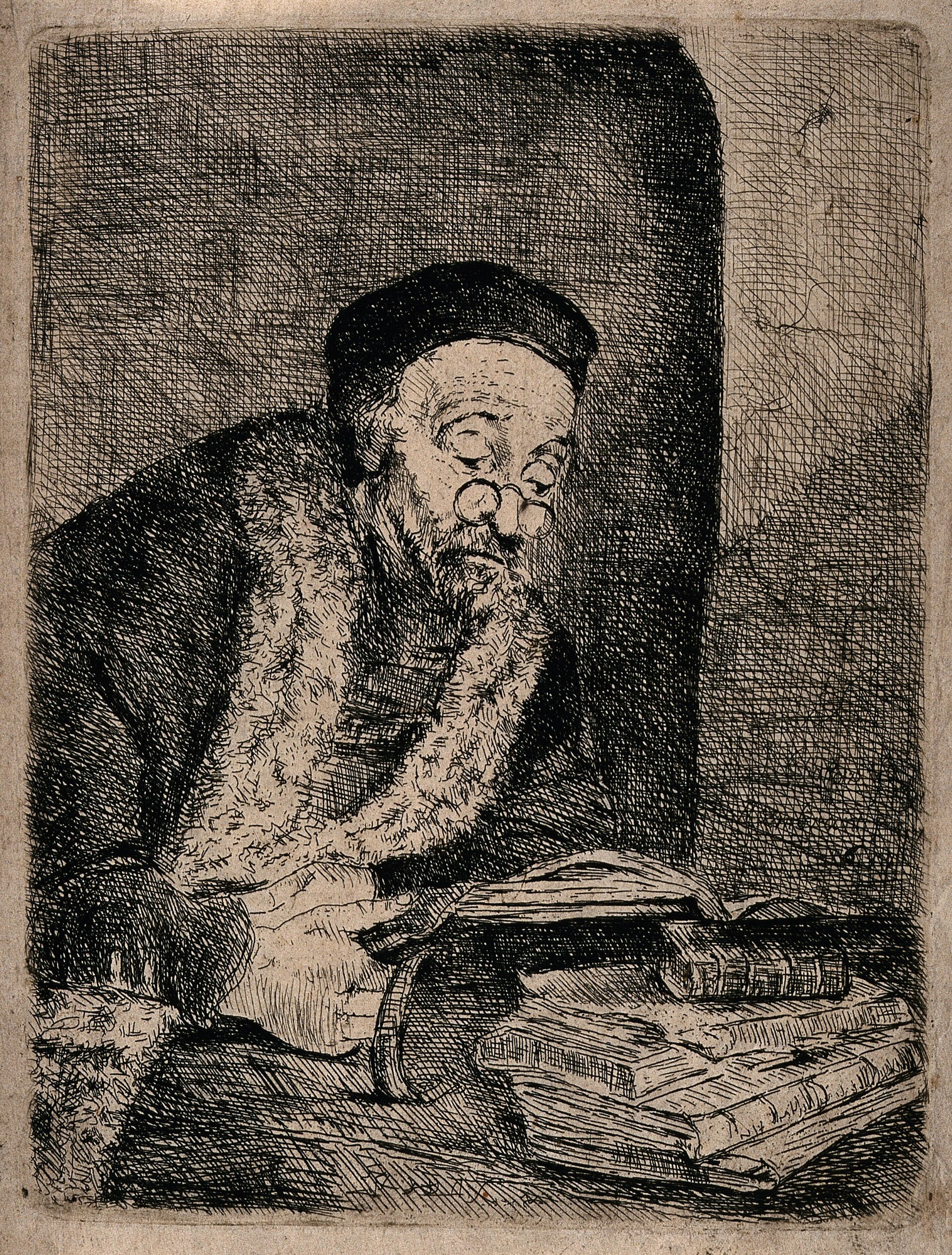
Sixty years after the four-year-old's question, and it is the same question — what happens next. The theme, the symbolism and the essay were the detour; only one of the two questions ever kept anybody reading.Source: https://wellcomeimages.org/indexplus/obf_images/5a/4a/077ef940f922716e27571a2ea362.jpg
Gallery: https://wellcomeimages.org/indexplus/image/V0015841.html
Wellcome Collection gallery (2018-03-23): https://wellcomecollection.org/works/kusjmwne CC-BY-4.0 — CC BY 4.0, Wikimedia Commons
And somewhere between those two questions, most people quietly stop reading for pleasure. This is not a national peculiarity: almost everywhere the figures exist, reading for pleasure falls sharply across the secondary school years.
This article is about three things: what literature actually does for a learner, what it cannot do, and why the right approach has to change with age.
Why the mind gives stories special treatment
Narrative is remembered better than expository prose. This is one of the more stable differences in reading research, and the reason is not mysterious.
A story has causal structure: one event leads to the next, so memory is handed the thread already strung. It has characters with goals, and humans model other people's intentions almost for free. And it has conflict, which forces the reader to keep predicting.
That last point is the important one. Prediction is the underlying mechanism of comprehension in general — you understand a sentence quickly because your brain has already guessed most of it. A good story is a machine for making you predict, continuously. It exercises precisely the muscle that reading needs.
None of this means stories are magic. It means narrative text supplies the causal scaffolding that expository text asks the reader to build for themselves. For a beginner, that is the difference between reading and not being able to.
Green and Brock named the state of being absorbed in a story transportation, and showed that the more transported a reader is, the more their beliefs shift towards the story's content. That is both why narrative is a powerful vehicle and why it warrants care.
What reading does for language — the part with numbers
The strongest case is about vocabulary, and it is a case about volume rather than intensity.
Nagy, Herman and Anderson (1985) measured the probability of learning a new word from a single encounter in context. It is small — roughly one in twenty. That sounds discouraging until you multiply.
A child reading a million words a year meets thousands of unknown words. Even at that low pickup rate, the result is more than a thousand words a year, acquired with nobody teaching and nobody testing. No syllabus can deliver that volume.
Cunningham and Stanovich (1997) showed that print exposure predicts vocabulary and general knowledge even after cognitive ability is controlled for. Reading a lot does not merely accompany knowing a lot; it helps produce it.
But there is a threshold, and this is the number adult language learners most need. Hu and Nation (2000) found that to read fiction comfortably without help, a reader needs to know around 98% of the running words. At 95%, comprehension drops noticeably. Below that it stops being reading and becomes decoding.
Nation (2006) estimated what 98% coverage of a novel requires: somewhere around 8,000–9,000 word families.
That single figure explains most of the frustration adults feel with literature in a second language. You can be a confident B2 speaker and still sit below the threshold for an unmodified novel. That is not evidence that you are bad at languages. It is arithmetic.
Extensive reading works — Nakanishi's meta-analysis (2015) found small-to-moderate gains in reading comprehension and vocabulary — but it works at the right level.
Age one: before they read alone
This stage has the strongest evidence in the whole field. And the interesting part is that what matters is not the book — it is the conversation around the book.
Whitehurst and colleagues (1988) named the technique dialogic reading. The adult stops being the narrator and becomes the questioner: open questions, expanding on whatever the child says, following the child's interest. The child moves from listener to teller. In trials this produced measurable differences in expressive language compared with plain reading aloud.
The meta-analysis by Bus, van IJzendoorn and Pellegrini (1995) found joint book reading relates to vocabulary and later reading ability at a moderate strength.
Read above their reading level, at their listening level. For years, a child's listening comprehension runs well ahead of what they can decode themselves. The read-aloud is where harder vocabulary can arrive, because the adult carries the decoding.
Rereading is not wasted. A child demanding the same story for the twelfth time is doing exactly the right thing: repeated encounters are how the words settle.
Age two: from learning to read to reading to learn
Around eight to ten, the material itself changes. Sentences lengthen, the vocabulary turns bookish, and texts stop being about the world immediately in front of the child.
Jeanne Chall called what follows the fourth-grade slump: children who decoded perfectly well begin to fall behind — not at sounding words out, but at vocabulary and background knowledge.
And here Stanovich (1986) described the Matthew effect: strong readers read more, so they learn more words, so reading gets easier, so they read more. The downward spiral is exactly as reliable.
The implication is uncomfortable. The intervention that matters most at this stage is volume, and the largest lever on volume is whether the child wants to read at all. No amount of reading instruction rescues a child who does not read.
One further point gets skipped: at this stage knowledge matters more than skill. A weaker reader who knows about football will understand a passage about football better than a stronger reader who does not. Reading widely about the world is not a nice extra alongside reading practice — it is reading practice.
Age three: adolescence, where school and reading part company
This is where reading for pleasure collapses in most countries, and the mechanism is not mysterious: reading becomes something that is marked.
Guthrie and Wigfield showed that autonomy and choice predict reading engagement. Assessment tends to remove both — what you read, when you read it, and what you must say afterwards are all decided by someone else.
The second factor is identity. Adolescents read to work out who they are becoming. That is why young adult fiction works, and why a canonical text set at the wrong moment does not.
And there is usually a local accelerant. In many exam cultures the assessed product is an essay of a predictable shape — which means the optimal student strategy is to memorise a good one, and reading the actual work becomes optional. That is not a failure of students; it is precisely what the incentive structure rewards. If you want students to read, the questions have to be ones a memorised model answer cannot survive.
Age four: adults learning a second language
Adults hold one advantage children do not: world knowledge. You infer a great deal from context because you already know how situations tend to go.
And one disadvantage: the coverage threshold, combined with impatience.
Many adults refuse graded readers as beneath them. The numbers say otherwise. Below 95% coverage, reading speed drops to a level at which the necessary volume is unreachable — and volume is what makes reading work at all. One difficult page in twenty minutes is not wide reading.
Day and Bamford (1998) set out the principles of extensive reading: easy material, wide choice, reading for pleasure, reading fast, no constant dictionary use, individual and silent.
The sensible progression follows: graded readers → young adult fiction in the target language → contemporary adult fiction → and the canonical works last, not first. Literary language is the hardest register, not the natural starting point. Beginning with Shakespeare or Dream of the Red Chamber is walking in through the wrong door.
Elley's book flood studies (1991) in Fiji and Singapore support the same point: when the supply of readable books rose, language outcomes rose with it — without additional grammar teaching.
One small trick with a large effect: reread in the new language a book whose plot you already know. Having the story already in memory carries much of the inferential load, which lifts your effective coverage considerably.
Age five: older learners
Less research here, so more caution is owed.
Reading remains one of the richest cognitive activities available. But claims that reading prevents cognitive decline run ahead of the evidence — most of the data is correlational, and people who still read a great deal are already people whose cognition is holding up.
What does hold: the coverage threshold does not change with age, and neither does the principle that people continue only with what they enjoy. Older learners often do well with short chapters, larger type, and books they first read decades ago.
A claim that did not survive
This needs saying plainly, because it is still cited everywhere.
In 2013 Kidd and Castano published a result in Science that travelled around the world: reading literary fiction, as opposed to popular fiction, improved performance on a test of reading other people's mental states.
Direct replications failed. Panero and colleagues (2016) ran a large replication and found no effect; other attempts came up empty too.
What remains is weaker and correlational: Mar's work finds that lifetime exposure to fiction correlates modestly with social cognition — which could equally mean that people who are good at reading others enjoy fiction more.
So be honest about it. Literature makes you more empathetic is a moral belief, possibly a true one, but it is not currently an experimental finding.
The case for literature does not need it. Vocabulary, syntax, background knowledge, and the plain fact that people do this voluntarily for hours without being made to — that is already more than enough.
Authentic or simplified — the honest resolution
Widdowson argued that simplifying a text strips out what made it worth reading: the rhythm, the voice, the deliberate ambiguity.
The counter-argument is pure arithmetic: below the coverage threshold, an authentic text produces neither pleasure nor learning. It produces a dictionary being opened repeatedly.
The resolution is this: authenticity is a property of the task, not only of the text. A graded reader read voluntarily for pleasure is a more authentic act of reading than an unmodified poem dismantled line by line for marks.
And authentic texts keep their place — in listening, and in supported reading aloud, where the decoding load is shared.
What to actually do
Ages 0–6: read aloud daily, above their own reading level. Ask more than you narrate. Allow rereading freely. Do not turn story time into letter practice.
Ages 6–11: prioritise volume over difficulty. Give real choice. Read widely in non-fiction too — background knowledge is comprehension. Keep reading aloud even after they can read alone.
Ages 12–18: protect choice at all costs. Separate reading-for-pleasure from reading-for-marks. Ask questions a memorised model answer cannot survive.
Adult language learners: pick books easier than you think you need — aim at 98% known words. Read fast and widely, with restrained dictionary use. Reread books whose plot you know. Save the canon for the end of the journey.
Every age: abandon a book that is not working. Putting down a boring book is a reading skill, not a failure.
The question worth protecting
The four-year-old's question — what happens next? — is the one that keeps people reading for life.
Every stage of education is at risk of replacing it with a more intelligent-sounding question. Sometimes that replacement is necessary: people do need to learn to analyse, and analysis is a real skill.
But the order matters. The approach that works at each age is mostly the one that protects the first question long enough for the later ones to become worth asking.
Read the simple version
The same article, told in plain words — for younger readers, or for anyone who wants the point quickly.
A four-year-old listening to a story asks exactly one question: what happens next?
A fifteen-year-old in a literature lesson is asked a different one: what is the theme of this passage?
Both are reasonable questions. Only one of them is the reason anyone reads.
And somewhere between those two questions, most people quietly stop reading for pleasure. This is not a national peculiarity: almost everywhere the figures exist, reading for pleasure falls sharply across the secondary school years.
Why the mind gives stories special treatment
Narrative is remembered better than expository prose, and the reason is not mysterious.
A story has causal structure: one event leads to the next, so memory is handed the thread already strung. It has characters with goals, and humans model other people's intentions almost for free. And it has conflict, which forces the reader to keep predicting.
That last point is the important one. Prediction is the underlying mechanism of comprehension in general — you understand a sentence quickly because your brain has already guessed most of it. A good story is a machine for making you predict, continuously. It exercises precisely the muscle that reading needs.
None of this means stories are magic. It means narrative text supplies the causal scaffolding that expository text asks the reader to build for themselves. For a beginner, that is the difference between reading and not being able to.
Green and Brock named the state of being absorbed in a story transportation, and showed that the more transported a reader is, the more their beliefs shift towards the story's content. That is both why narrative is a powerful vehicle and why it warrants care.
What reading does for language — the part with numbers
Nagy, Herman and Anderson (1985) measured the probability of learning a new word from a single encounter in context. It is small — roughly one in twenty. That sounds discouraging until you multiply.
A child reading a million words a year meets thousands of unknown words. Even at that low pickup rate, the result is more than a thousand words a year, acquired with nobody teaching and nobody testing. No syllabus can deliver that volume.
Cunningham and Stanovich (1997) showed that print exposure predicts vocabulary and general knowledge even after cognitive ability is controlled for.
But there is a threshold, and this is the number adult language learners most need. Hu and Nation (2000) found that to read fiction comfortably without help, a reader needs to know around 98% of the running words. At 95%, comprehension drops noticeably. Below that it stops being reading and becomes decoding.
Nation (2006) estimated what 98% coverage of a novel requires: somewhere around 8,000–9,000 word families.
That single figure explains most of the frustration adults feel with literature in a second language. You can be a confident B2 speaker and still sit below the threshold for an unmodified novel. That is not evidence that you are bad at languages. It is arithmetic.
Extensive reading works — Nakanishi's meta-analysis (2015) found small-to-moderate gains — but it works at the right level.
Age one: before they read alone
This stage has the strongest evidence in the whole field. And the interesting part is that what matters is not the book — it is the conversation around the book.
Whitehurst and colleagues (1988) named the technique dialogic reading. The adult stops being the narrator and becomes the questioner: open questions, expanding on whatever the child says, following the child's interest. The child moves from listener to teller. In trials this produced measurable differences in expressive language compared with plain reading aloud.
Bus, van IJzendoorn and Pellegrini (1995) found joint book reading relates to vocabulary and later reading ability at a moderate strength.
Read above their reading level, at their listening level. For years, a child's listening comprehension runs well ahead of what they can decode themselves. The read-aloud is where harder vocabulary can arrive, because the adult carries the decoding.
And rereading is not wasted. A child demanding the same story for the twelfth time is doing exactly the right thing: repeated encounters are how the words settle.
Age two: from learning to read to reading to learn
Around eight to ten, the material itself changes. Sentences lengthen, the vocabulary turns bookish, and texts stop being about the world immediately in front of the child.
Jeanne Chall called what follows the fourth-grade slump: children who decoded perfectly well begin to fall behind — not at sounding words out, but at vocabulary and background knowledge.
And Stanovich (1986) described the Matthew effect: strong readers read more, so they learn more words, so reading gets easier, so they read more. The downward spiral is exactly as reliable.
The implication is uncomfortable. The intervention that matters most at this stage is volume, and the largest lever on volume is whether the child wants to read at all. No amount of reading instruction rescues a child who does not read.
One further point gets skipped: at this stage knowledge matters more than skill. A weaker reader who knows about football will understand a passage about football better than a stronger reader who does not. Reading widely about the world is not a nice extra alongside reading practice — it is reading practice.
Age three: adolescence, where school and reading part company
This is where reading for pleasure collapses in most countries, and the mechanism is not mysterious: reading becomes something that is marked.
Guthrie and Wigfield showed that autonomy and choice predict reading engagement. Assessment tends to remove both — what you read, when you read it, and what you must say afterwards are all decided by someone else.
The second factor is identity. Adolescents read to work out who they are becoming. That is why young adult fiction works, and why a canonical text set at the wrong moment does not.
And there is usually a local accelerant. In many exam cultures the assessed product is an essay of a predictable shape — which means the optimal student strategy is to memorise a good one, and reading the actual work becomes optional. That is not a failure of students; it is precisely what the incentive structure rewards.If you want students to read, the questions have to be ones a memorised model answer cannot survive.
Age four: adults learning a second language
Adults hold one advantage children do not: world knowledge. You infer a great deal from context because you already know how situations tend to go.
And one disadvantage: the coverage threshold, combined with impatience.
Many adults refuse graded readers as beneath them. The numbers say otherwise. Below 95% coverage, reading speed drops to a level at which the necessary volume is unreachable — and volume is what makes reading work at all. One difficult page in twenty minutes is not wide reading.
Day and Bamford (1998) set out the principles of extensive reading: easy material, wide choice, reading for pleasure, reading fast, no constant dictionary use, individual and silent.
The sensible progression follows: graded readers → young adult fiction in the target language → contemporary adult fiction → and the canonical works last, not first. Literary language is the hardest register, not the natural starting point. Beginning with Shakespeare or Dream of the Red Chamber is walking in through the wrong door.
Elley's book flood studies (1991) in Fiji and Singapore support the same point: when the supply of readable books rose, language outcomes rose with it — without additional grammar teaching.
One small trick with a large effect: reread in the new language a book whose plot you already know. Having the story already in memory carries much of the inferential load, which lifts your effective coverage considerably.
Age five: older learners
Less research here, so more caution is owed.
Reading remains one of the richest cognitive activities available. But claims that reading prevents cognitive decline run ahead of the evidence — most of the data is correlational, and people who still read a great deal are already people whose cognition is holding up.
What does hold: the coverage threshold does not change with age, and neither does the principle that people continue only with what they enjoy. Older learners often do well with short chapters, larger type, and books they first read decades ago.
A claim that did not survive
This needs saying plainly, because it is still cited everywhere.
In 2013 Kidd and Castano published a result in Science that travelled around the world: reading literary fiction, as opposed to popular fiction, improved performance on a test of reading other people's mental states.
Direct replications failed. Panero and colleagues (2016) ran a large replication and found no effect; other attempts came up empty too.
What remains is weaker and correlational: Mar's work finds that lifetime exposure to fiction correlates modestly with social cognition — which could equally mean that people who are good at reading others enjoy fiction more.
So be honest about it. Literature makes you more empathetic is a moral belief, possibly a true one, but it is not currently an experimental finding.
The case for literature does not need it. Vocabulary, syntax, background knowledge, and the plain fact that people do this voluntarily for hours without being made to — that is already more than enough.
Authentic or simplified — the honest resolution
Widdowson argued that simplifying a text strips out what made it worth reading: the rhythm, the voice, the deliberate ambiguity.
The counter-argument is pure arithmetic: below the coverage threshold, an authentic text produces neither pleasure nor learning. It produces a dictionary being opened repeatedly.
The resolution is this: authenticity is a property of the task, not only of the text. A graded reader read voluntarily for pleasure is a more authentic act of reading than an unmodified poem dismantled line by line for marks.
And authentic texts keep their place — in listening, and in supported reading aloud, where the decoding load is shared.
What to actually do
Ages 0–6: read aloud daily, above their own reading level. Ask more than you narrate. Allow rereading freely. Do not turn story time into letter practice.
Ages 6–11: prioritise volume over difficulty. Give real choice. Read widely in non-fiction too — background knowledge is comprehension. Keep reading aloud even after they can read alone.
Ages 12–18: protect choice at all costs. Separate reading-for-pleasure from reading-for-marks. Ask questions a memorised model answer cannot survive.
Adult language learners: pick books easier than you think you need — aim at 98% known words. Read fast and widely, with restrained dictionary use. Reread books whose plot you know. Save the canon for the end of the journey.
Every age: abandon a book that is not working. Putting down a boring book is a reading skill, not a failure.
The question worth protecting
The four-year-old's question — what happens next? — is the one that keeps people reading for life.
Every stage of education is at risk of replacing it with a more intelligent-sounding question. Sometimes that replacement is necessary: people do need to learn to analyse, and analysis is a real skill.
But the order matters. The approach that works at each age is mostly the one that protects the first question long enough for the later ones to become worth asking.
Sources & further reading
These articles summarize well-established research in learning science and linguistics. Key sources and further reading:
Nagy, W. E., Herman, P. A., & Anderson, R. C. (1985). Learning words from context. Reading Research Quarterly, 20(2), 233–253.
Hu, M., & Nation, P. (2000). Unknown vocabulary density and reading comprehension. Reading in a Foreign Language, 13(1), 403–430.
Nation, I. S. P. (2006). How large a vocabulary is needed for reading and listening? Canadian Modern Language Review, 63(1), 59–82.
Whitehurst, G. J., Falco, F. L., Lonigan, C. J., et al. (1988). Accelerating language development through picture book reading. Developmental Psychology, 24(4), 552–559.
Bus, A. G., van IJzendoorn, M. H., & Pellegrini, A. D. (1995). Joint book reading makes for success in learning to read: A meta-analysis on intergenerational transmission of literacy. Review of Educational Research, 65(1), 1–21.
Chall, J. S., Jacobs, V. A., & Baldwin, L. E. (1990). The Reading Crisis: Why Poor Children Fall Behind. Cambridge, MA: Harvard University Press.
Stanovich, K. E. (1986). Matthew effects in reading: Some consequences of individual differences in the acquisition of literacy. Reading Research Quarterly, 21(4), 360–407.
Cunningham, A. E., & Stanovich, K. E. (1997). Early reading acquisition and its relation to reading experience and ability 10 years later. Developmental Psychology, 33(6), 934–945.
Elley, W. B. (1991). Acquiring literacy in a second language: The effect of book-based programs. Language Learning, 41(3), 375–411.
Day, R. R., & Bamford, J. (1998). Extensive Reading in the Second Language Classroom. Cambridge: Cambridge University Press.
Nakanishi, T. (2015). A meta-analysis of extensive reading research. TESOL Quarterly, 49(1), 6–37.
Guthrie, J. T., & Wigfield, A. (2000). Engagement and motivation in reading. In M. L. Kamil et al. (Eds.), Handbook of Reading Research, Vol. III. Mahwah, NJ: Erlbaum.
Green, M. C., & Brock, T. C. (2000). The role of transportation in the persuasiveness of public narratives. Journal of Personality and Social Psychology, 79(5), 701–721.
Kidd, D. C., & Castano, E. (2013). Reading literary fiction improves theory of mind. Science, 342(6156), 377–380.
Panero, M. E., Weisberg, D. S., Black, J., et al. (2016). Does reading a single passage of literary fiction really improve theory of mind? An attempt at replication. Journal of Personality and Social Psychology, 111(5), e46–e54.
Mar, R. A. (2018). Stories and the promotion of social cognition. Current Directions in Psychological Science, 27(4), 257–262.
Widdowson, H. G. (1978). Teaching Language as Communication. Oxford: Oxford University Press.