What Spaced Repetition Optimizes — and Where It Stops
Spaced repetition can guarantee you never forget a word — but that promise is narrower than it sounds. What it truly optimizes (durable recall of discrete items, at maximum efficiency), the mechanisms behind it, and the hard limits: it optimizes recall, not use; items, not skills; and strips away the context that makes a word usable.
AI Aggregated source·July 30, 2026·5 min read·Habits & method
Few learning tools have as devoted a following as spaced repetition. Apps like Anki have turned it into a daily ritual for millions, and the promise is intoxicating: show a fact to the algorithm, and it will make sure you never forget it. The promise is largely true — but it is also narrower than it sounds. Spaced repetition is not a general engine for learning a language; it is a precision instrument that optimizes one specific thing extremely well, and is nearly useless for several others. Knowing exactly where that line falls is the difference between a tool that saves you years and a habit that quietly wastes your time.
What spaced repetition actually is
The idea rests on one of the oldest findings in psychology. In 1885, Hermann Ebbinghaus mapped the forgetting curve — the way newly learned information decays rapidly unless it is revisited. He also found its remedy: the spacing effect. Reviews spread out over time produce far more durable memory than the same reviews crammed together. Spaced repetition software simply automates this. It tracks how well you recall each item and schedules the next review for the moment you are about to forget it — intervals that stretch from a day, to a week, to months, to years. Each successful recall at the edge of forgetting strengthens the memory and pushes the next review further out.
What it optimizes — and optimizes brilliantly
Durable recall of discrete items, at maximum efficiency. That is the whole of its genius, and it is a large thing. For material that comes in neat, memorizable units — vocabulary words, Chinese characters, isolated facts, paired translations — spaced repetition is arguably the most efficient memory technology ever devised. It guarantees that what you put in stays in, while asking for the smallest possible number of reviews to keep it there.
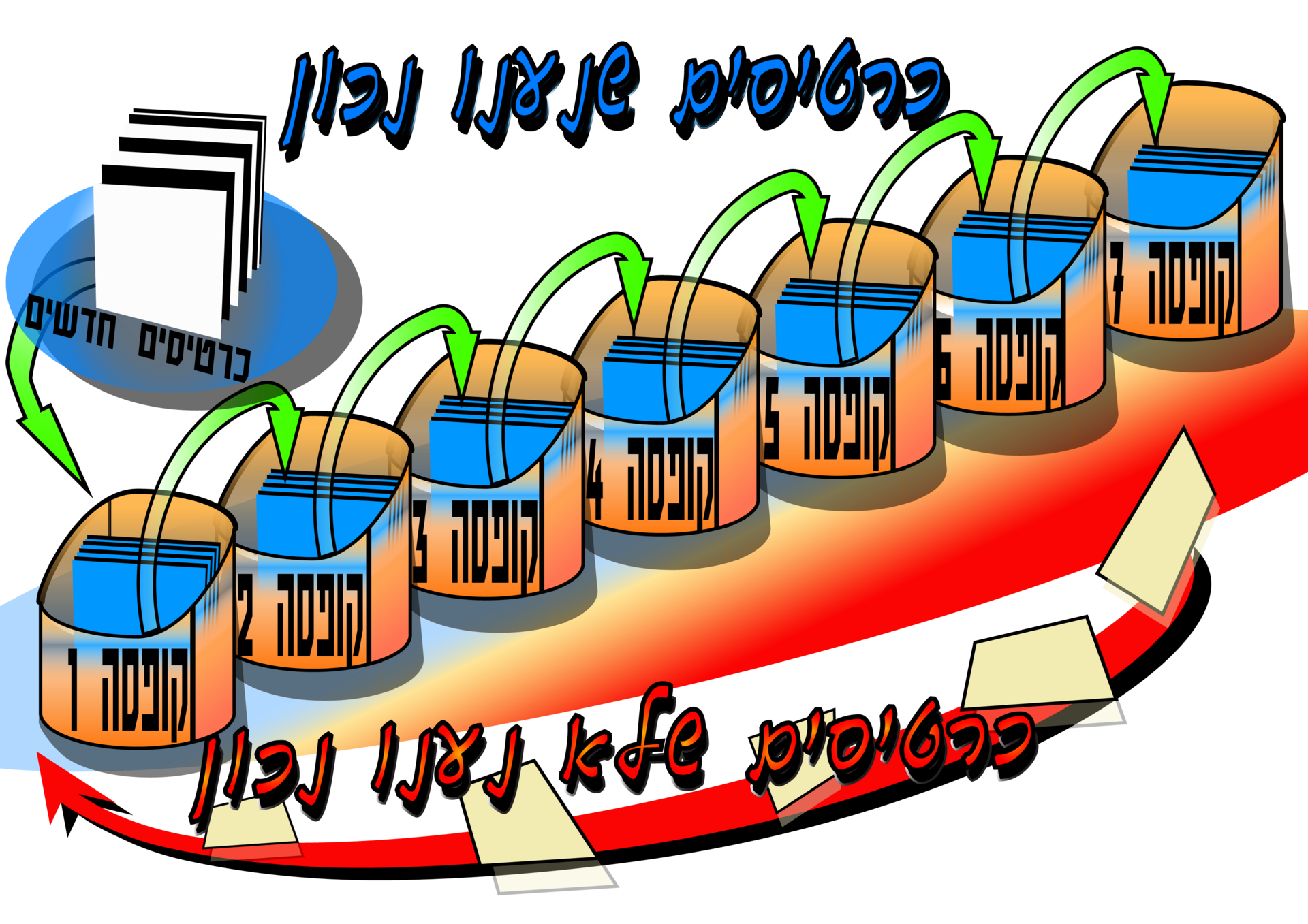
The Leitner system, worked out with paper cards decades before any software existed. Each box is reviewed less often than the one before it, and a card you fail falls all the way back — which is the whole scheduling idea, in a shoebox.Source: Natietietie — CC BY-SA 4.0, Wikimedia Commons
Two mechanisms make it work. The first is retrieval practice: a flashcard forces you to pull the answer from memory rather than merely reread it, and the act of retrieving is itself what strengthens the trace — the well-documented testing effect. The second is desirable difficulty, Robert Bjork's principle that a memory reviewed when it is slightly hard to recall is strengthened far more than one reviewed while still easy. Spaced repetition engineers exactly that productive difficulty, over and over, automatically. For the raw memorization layer of a language, nothing else comes close.
Where it stops
The limits are not flaws in the tool; they are simply the edges of what memorization can do. Trouble comes only when learners expect it to do more.
It optimizes recall, not use. This is the central boundary. Recognizing a word on a card is declarative knowledge — knowing that. Producing that word instantly, correctly, and unconsciously in the middle of a live conversation is procedural skill — knowing how. The two are stored and built differently, and no amount of flashcard review converts one into the other. You can have three thousand words mature in your deck and still freeze when you have to speak, because fluency is a skill built by using the language under real-time pressure, not by reviewing it.
It strips away context, and context is most of a word. To truly know a word, as the vocabulary researcher Paul Nation details, is to know its collocations, register, connotations, grammatical behavior, and the situations it belongs to. A flashcard captures a thin slice of that — usually a single translation. Learn a word only as an isolated pair and you often learn a hollow version of it: you can recall the gloss but misuse the word, because everything that tells you how to use it lived in the contexts the card threw away.
It reviews items, not skills. Spaced repetition works on things that can be cut into discrete cards. Enormous parts of a language cannot be: the intuition for grammar, the motor control of pronunciation, the real-time parsing of fast speech, the flow of writing. These are procedures, trained by repeated doing, and there is simply no card to schedule for them.
Garbage in, garbage out. The algorithm faithfully burns whatever you feed it into long-term memory — including bad cards. An ambiguous, overloaded, or poorly made card teaches you to recognize the card, not the knowledge, and the system will loyally preserve that useless association for years.
It has an opportunity cost. Reviews are time, and time spent tapping through a deck is time not spent reading, listening, or speaking — the rich, contextual input that actually builds comprehension and fluency. Beyond a certain point, a growing deck optimizes your reviewing at the expense of your living in the language.
Using it for exactly what it is good at
Treat it as a memory tool, not a language course. Let it do the one job it is unmatched at — holding vocabulary and characters in long-term memory — and get fluency, comprehension, and grammar from real use elsewhere.
Feed it words you have already met in context. The deck should reinforce language you encountered while reading or listening, not introduce cold, contextless items. Meet the word in the wild first; use the card to make it permanent.
Make rich cards. Add an example sentence, an image, or the collocation, so you are strengthening a word in context rather than a bare translation pair.
Keep the deck lean. A smaller set of high-value cards you actually maintain beats a bloated deck that eats the hours you should be spending on input.
The takeaway
Spaced repetition optimizes one thing with near-perfect efficiency: the durable, long-term recall of discrete, memorizable items. That is genuinely valuable — for the vocabulary and characters every learner must simply know, it can save years of forgetting and relearning. But it stops precisely where memory stops and skill begins. It cannot give you the ability to use what you have memorized, the context that makes a word usable, or the procedural fluency of speaking, listening, and understanding. Use it as the superb memory assistant it is — bolted onto a life of real reading, listening, and talking — and it earns its place. Mistake it for the whole of learning, and you will end up with a beautifully maintained deck and a language you still cannot speak.
Read the simple version
The same article, told in plain words — for younger readers, or for anyone who wants the point quickly.
Few tools have as devoted a following as spaced repetition, and the promise is intoxicating: show a fact to the algorithm and you will never forget it.
The promise is largely true. It is also narrower than it sounds.
What it actually does
The idea rests on one of the oldest findings in psychology: newly learned things decay fast unless you meet them again — and reviews spread out over time produce far more durable memory than the same reviews crammed together.
The software just automates this. It tracks how well you recall each item and schedules the next review for the moment you are about to forget it — a day, then a week, then months, then years.
What it optimises, and optimises brilliantly
Durable recall of separate items, at maximum efficiency. That is the whole of its genius, and it is a large thing.
For material that comes in neat memorisable units — words, characters, isolated facts — it is arguably the most efficient memory technology ever devised. It guarantees that what you put in stays in, for the smallest possible number of reviews.
Two things make it work. A card forces you to pull the answer from memory rather than reread it. And it catches you at the moment recall is slightly hard — which is exactly when a memory is strengthened most.
Where it stops
These are not flaws. They are the edges of what memorising can do. Trouble comes only when learners expect more.
It optimises recall, not use. This is the central boundary. Recognising a word on a card is knowing that. Producing it instantly and unconsciously in the middle of a live conversation is knowing how. The two are built differently, and no amount of flashcard review turns one into the other.
You can have three thousand words mature in your deck and still freeze when you have to speak.
It strips away context, and context is most of a word. Really knowing a word means knowing what it goes with, how formal it is, what it hints at, how it behaves grammatically. A card usually captures one translation. Learn a word only as a pair and you often learn a hollow version: you can recall the gloss but misuse the word, because everything that told you how to use it lived in the context the card threw away.
It reviews items, not skills. Huge parts of a language cannot be cut into cards: the intuition for grammar, the muscle control of pronunciation, the real-time parsing of fast speech. There is simply no card to schedule for those.
Garbage in, garbage out. The algorithm faithfully burns whatever you feed it into long-term memory — including bad cards. An ambiguous card teaches you to recognise the card, and the system will loyally preserve that useless association for years.
And it has a cost. Reviews are time, and time tapping through a deck is time not spent reading, listening or speaking. Past a certain point, a growing deck optimises your reviewing at the expense of your living in the language.
Using it for exactly what it is good at
Treat it as a memory tool, not a language course.
Feed it words you have already met in context. Meet the word in the wild first; use the card to make it permanent.
Make rich cards. An example sentence, an image, the phrase it lives in — so you are strengthening a word in context, not a bare pair.
Keep the deck lean. A small set you actually maintain beats a bloated one that eats the hours you should spend on input.
Use it as the superb memory assistant it is, bolted onto a life of real reading, listening and talking, and it earns its place.
Mistake it for the whole of learning, and you end up with a beautifully maintained deck and a language you still cannot speak.
Sources & further reading
These articles summarize well-established research in learning science and linguistics. Key sources and further reading:
Ebbinghaus, H. (1885). Über das Gedächtnis (Memory: A Contribution to Experimental Psychology). Duncker & Humblot.
Cepeda, N. J., Pashler, H., Vul, E., Wixted, J. T., & Rohrer, D. (2006). Distributed practice in verbal recall tasks: A review and quantitative synthesis. Psychological Bulletin.
Roediger, H. L., & Karpicke, J. D. (2006). Test-enhanced learning: Taking memory tests improves long-term retention. Psychological Science.
Bjork, R. A. (1994). Memory and metamemory considerations in the training of human beings. In J. Metcalfe & A. Shimamura (Eds.), Metacognition: Knowing about Knowing. MIT Press.
Nation, I. S. P. (2001). Learning Vocabulary in Another Language. Cambridge University Press.
DeKeyser, R. (Ed.). (2007). Practice in a Second Language: Perspectives from Applied Linguistics and Cognitive Psychology. Cambridge University Press.