Reading Aloud: How Speaking the Words Deepens Memory, Language, and Love
The childhood habit we abandoned is one of the most powerful things you can do with a book. How reading aloud helps you remember more, learn a language faster, love reading again — and bond with the people you read for.
AI Aggregated source·July 30, 2026·4 min read·Reading
Somewhere along the way, most of us were taught to read silently and quickly. Reading aloud got left behind in childhood — something for kids who hadn't learned to read properly yet. But that quiet habit we abandoned turns out to be one of the most powerful, and most human, things you can do with a book. When you say the words instead of just scanning them, you remember more, understand more, learn a language faster, enjoy the book more deeply — and, if you read to someone, you build something between you that lasts.
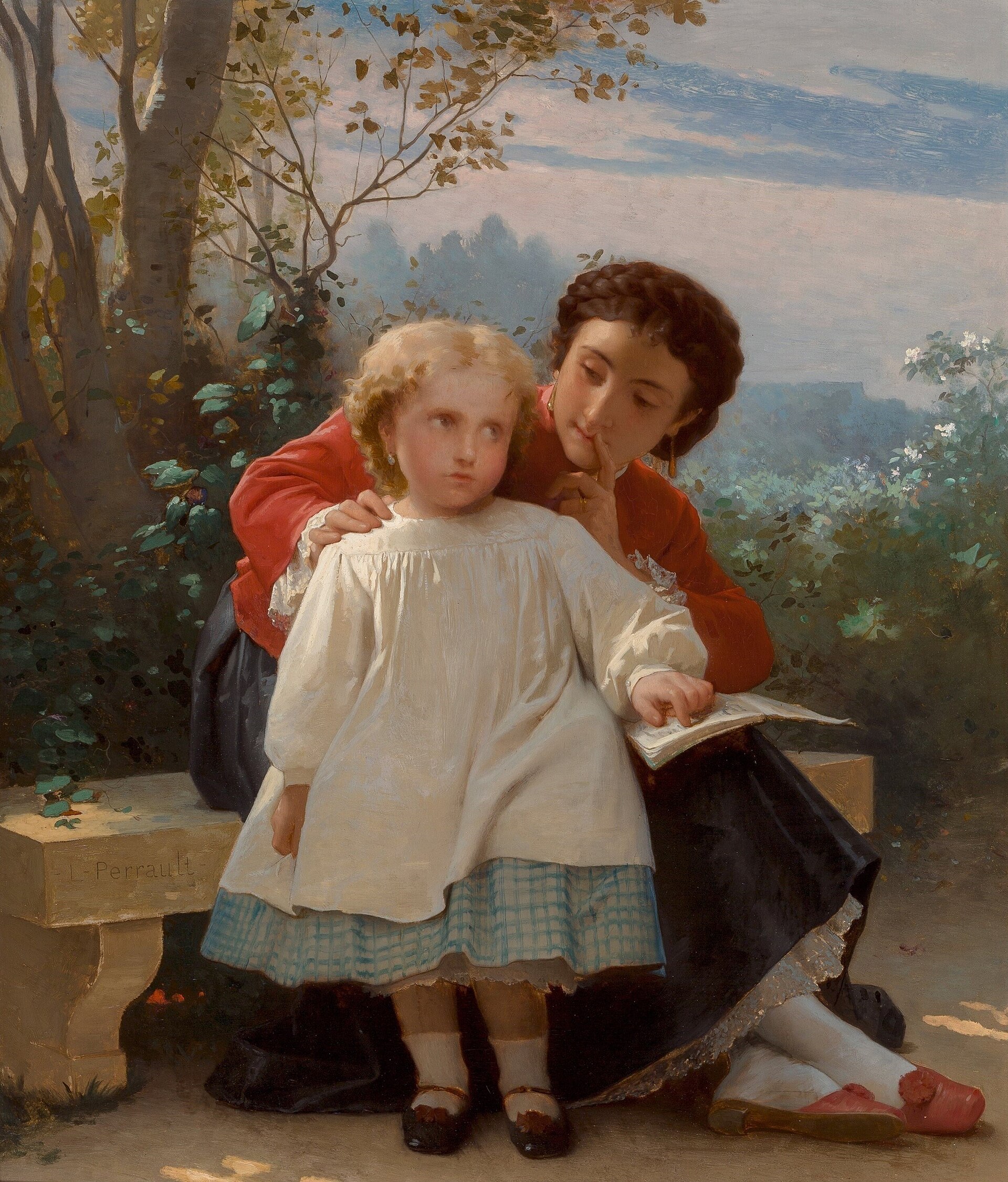
For most of the history of reading, this was reading — done out loud, and usually to somebody. Silent reading is the recent habit, and the thing it quietly gave up is the one psychologists now measure and call the production effect.Source: Léon Bazille Perrault — Public domain, Wikimedia Commons
You remember and understand more when you say it
Psychologists have a name for it: the production effect. In study after study, words read aloud are remembered noticeably better than the same words read in silence. Speaking a word makes it distinctive — you produce it, you hear yourself, and that extra effort leaves a deeper trace in memory.
Understanding grows too, because reading aloud will not let you skim. Silent reading lets your eyes skate over half a sentence and fill in the rest by guessing; your voice cannot. It forces you to process every word, and it adds prosody — the rhythm, stress, and melody of speech — which quietly reveals how a sentence is built and what it means. A clause that was a tangle on the page untangles itself the moment you have to say it well.
It is one of the best ways to learn a language
For anyone learning a new language, reading aloud is a small miracle of efficiency, because it works three senses at once. Your eyes see the word, your mouth shapes it, your ears hear it — a multisensory loop that binds spelling to sound and makes both stick. You practise pronunciation and the music of the language in the same breath as vocabulary and grammar.
It also builds the thing textbooks struggle to teach: fluency — the smooth, automatic flow of connected speech. Reading a passage aloud, then again, then a little faster, trains your mouth and your ear together until the rhythm of the language starts to feel like your own. Few activities give a learner so much for so little.
You fall in love with books again — if you let go of speed
Here is the catch, and the gift: reading aloud is slower. In a culture that measures reading in words per minute and books per year, that feels like a loss. It is the opposite. When you stop racing, a book stops being a task to finish and becomes something to savour — the sound of a good sentence in your own mouth, the weight of a well-chosen word, the pleasure of a paragraph read at the pace it was written for.
Give yourself permission to be slow, and reading changes character. You notice the writing. You feel the humour and the sorrow. You look forward to it. Many people who thought they had simply fallen out of reading find that they had only fallen out of rushing — and that reading aloud, unhurried, gives the love of books right back.
It builds a bond with the people you read for
And then there is the part that has nothing to do with efficiency at all. When you read aloud to someone, you are not just sharing a story — you are sharing time, attention, and your own voice. That is the oldest kind of closeness there is.
Read to your child, and you are giving them language and literacy and, just as importantly, the warm certainty that they are worth sitting with. Read to your grandchildren, and you hand down more than a story — you hand down your voice, to be remembered long after. Read to your ageing parents, and you return, gently, the gift they may once have given you; a chapter a day can be the tenderest kind of company. Read with a friend or a partner, and a book becomes a small shared world that belongs only to the two of you.
And do not forget the simplest audience of all: yourself. Reading aloud when you are alone is not strange — it is good company. Your own voice, carrying a good book, is a quiet way of keeping yourself gentle and present.
An invitation
So try it this week. Choose a book you love, or one you have been meaning to read, and read a few pages out loud — slowly, without worrying how fast you go. Read them to a child at bedtime, to a parent over the phone, to a friend on the sofa, or to no one but yourself. You will remember more, understand more, and learn more. But mostly, you will be reminded that reading was never only about getting to the end — it was about the voice, the moment, and the person listening.
Read the simple version
The same article, told in plain words — for younger readers, or for anyone who wants the point quickly.
Most of us were taught to read silently and fast. Reading out loud got left behind in childhood — something for kids who could not read properly yet.
That habit we dropped turns out to be one of the best things you can do with a book.
You remember more when you say it
Words read aloud are remembered better than the same words read in silence. Saying a word makes it stand out: you make the sound, you hear yourself make it, and that extra effort leaves a deeper mark.
You also understand more, for a blunt reason — your voice will not let you skim. Silent eyes skate over half a sentence and guess the rest. A mouth has to say every word. And saying it adds the tune: the rhythm and stress that show you how a sentence is put together. A clause that looked like a tangle untangles the moment you have to read it well.
For a language learner it is three lessons at once
Your eyes see the word. Your mouth shapes it. Your ears hear it. Spelling gets tied to sound, and both stay put. You are practising pronunciation in the same breath as vocabulary and grammar.
It also builds the thing textbooks cannot teach: flow. Read a passage aloud, then again, then a little faster, and your mouth and ear learn the rhythm together until it starts to feel like yours.
Slow is the gift, not the cost
Reading aloud is slower. In a world that counts words per minute, that sounds like losing. It is the opposite.
When you stop racing, a book stops being a task to finish. You hear the good sentence in your own mouth. You notice the joke. Many people who think they have fallen out of reading have only fallen out of rushing.
And it is for someone
When you read to a person you are giving them the story, your time, and your voice at once. That is the oldest kind of closeness there is.
Read to a child at bedtime and you give them language, and the warm certainty that they are worth sitting with. Read to your grandparents or your parents, and a chapter a day becomes the gentlest kind of company.
And do not forget the simplest listener of all: yourself. Reading aloud alone is not strange. Your own voice carrying a good book is good company.
Try it this week
Take a book you love and read a few pages out loud, slowly, with nobody timing you. Reading was never only about reaching the end.
Sources & further reading
These articles summarize well-established research in learning science and linguistics. Key sources and further reading:
MacLeod, C. M., Gopie, N., Hourihan, K. L., Neary, K. R., & Ozubko, J. D. (2010). The production effect: Delineation of a phenomenon. Journal of Experimental Psychology: Learning, Memory, and Cognition.
Duursma, E., Augustyn, M., & Zuckerman, B. (2008). Reading aloud to children: The evidence. Archives of Disease in Childhood.
Trelease, J. The Read-Aloud Handbook. Penguin Books.
,_by_Leon_Basile_Perrault.jpg)