The Sinosphere: East Asia's shared vocabulary, and the head start it gives you
学生, học sinh, 학생, 学生 — four unrelated languages, one word. That is the Sinosphere, where China, Vietnam, Korea and Japan have shared a vocabulary for two thousand years. How that layer was built, why it hands Vietnamese speakers an enormous head start in Chinese, and the traps that turn the advantage against you.
Look at these four words: 学生 (xuésheng), học sinh, 학생 (haksaeng), 学生 (gakusei). Chinese, Vietnamese, Korean, Japanese — the same word, the same meaning, the same two characters underneath.
What makes that remarkable is that the four languages are not related to each other at all. Vietnamese is Austroasiatic, Korean is its own family, Japanese is Japonic, Chinese is Sino-Tibetan. Grammatically and genetically they sit as far apart as English and Arabic. And yet they share tens of thousands of words.
The phenomenon has a name: the Sinosphere — 漢字文化圈, the sphere of Chinese-character culture. For a Vietnamese speaker learning Chinese it is probably the single largest advantage available, and one that very few learners exploit systematically.
A shared vocabulary, not a shared family
For nearly two thousand years, Literary Chinese played the role in East Asia that Latin played in Europe: the language of administration, of the civil examinations, of Buddhist scripture, history and poetry. A Vietnamese official, a Korean scholar and a Japanese monk might not manage one spoken sentence between them, yet they could hold an entire conversation in writing — the practice known as brush talk.
Each country read the characters in its own way. 學 is học in Vietnamese, hak in Korean, gaku in Japanese, xué in Chinese. Four different sounds, all descended from the same Middle Chinese pronunciation — which means they differ systematically, not randomly.
The borrowed layer is enormous. Sino-Vietnamese accounts for roughly 60% of the Vietnamese lexicon, and considerably more in academic, legal and medical writing. Sino-Korean makes up something like 57–60% of dictionary entries. Sino-Japanese vocabulary — kango — dominates the Japanese dictionary too, though it is less frequent in everyday speech.
The nineteenth-century reversal
Here is the part most learners never hear, and it inverts the usual story of China giving and everyone else receiving.
In the late nineteenth century Japan modernised at speed and had to translate a flood of Western concepts that had never existed in East Asia. Meiji scholars did not borrow English sounds; they built new words out of Chinese characters: 哲学 (philosophy), 科学 (science), 社会 (society), 経済 (economy), 電話 (telephone), 物理 (physics).
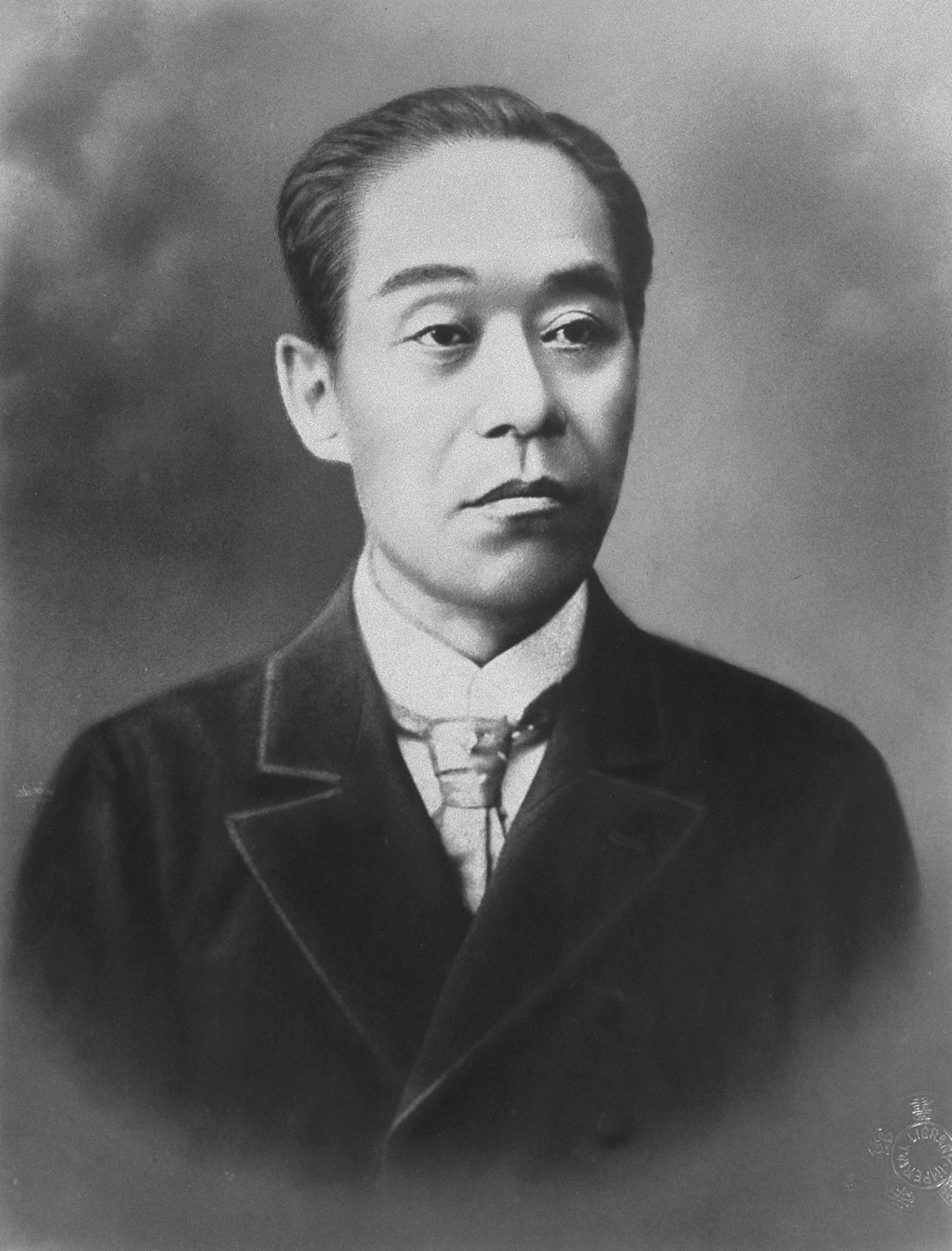
Fukuzawa Yukichi, one of the Meiji translators. The words they built from Chinese characters to carry Western ideas — society, economy, philosophy — were then borrowed back by China and into Vietnamese and Korean.Source: Unknown authorUnknown author — Public domain, Wikimedia Commons
Those coinages then flowed back into China, carried by Chinese students in Tokyo, and onward into Vietnam and Korea. When a Vietnamese speaker says khoa học, xã hội, kinh tế or triết học, they are using words assembled in Japan out of Chinese characters to translate European ideas. Even the formal name of the People\'s Republic of China contains elements that travelled this route.
The Sinosphere, in other words, was never a one-way street. It was a network of exchange — which is precisely why the modern, abstract vocabulary lines up so neatly across all four languages.
Why this is a genuine advantage in Chinese
Bilingual research has measured the effect at work here: the cognate facilitation effect. Words that resemble each other in form and meaning across two languages are recognised faster, learned faster and retained longer — De Groot and Nas demonstrated it in 1991, and Dijkstra\'s models of bilingual word recognition explain why: both languages activate together, so a cognate gets reinforcement from two directions at once.
Between Vietnamese and Chinese the supply of cognates is vast. Read this list and notice what happens as you do:
大学 dàxué — đại học · 银行 yínháng — ngân hàng · 注意 zhùyì — chú ý · 发展 fāzhǎn — phát triển · 经验 jīngyàn — kinh nghiệm · 自然 zìrán — tự nhiên · 文化 wénhuà — văn hóa · 历史 lìshǐ — lịch sử · 政府 zhèngfǔ — chính phủ · 公司 gōngsī — công ty · 安全 ānquán — an toàn · 教育 jiàoyù — giáo dục
You are not learning those in the ordinary sense. You are recognising them. And note where they sit: this is the two-syllable, abstract, academic layer that Western learners find hardest of all. Exactly where an English speaker slows to a crawl, a Vietnamese speaker accelerates.
The sound correspondences are regular
The advantage grows once you notice that the link between a Sino-Vietnamese reading and its modern Mandarin counterpart is not arbitrary. Both descend from Middle Chinese, so they correspond in repeating patterns:
學 xué → học · 香 xiāng → hương · 心 xīn → tâm · 家 jiā → gia · 京 jīng → kinh · 中 zhōng → trung · 生 shēng → sinh · 國 guó → quốc
And notice something striking: Vietnamese preserves the final -p, -t and -c consonants that Mandarin lost centuries ago (học, quốc, pháp). In that respect Sino-Vietnamese is closer to Middle Chinese than modern Mandarin is. You are carrying a phonological fossil around in your head.
In practice, learners find that hearing a Sino-Vietnamese word and predicting its Mandarin shape is a trainable skill — not always right, but right often enough to save an enormous amount of work.
Now the traps
The advantage has a sharp edge. When two words share characters but the meanings have drifted, your confidence walks you straight into the error.
困难 in Chinese means difficulty, entirely neutral. The same two characters in Vietnamese give khốn nạn — an insult. 方便 is Chinese for convenient, while Vietnamese phương tiện means a means or a vehicle. 博士 in Chinese is a PhD; Vietnamese bác sĩ is a medical doctor. 大家 in Chinese means everybody; Vietnamese đại gia means a tycoon.
The same happens across the rest of the sphere: 手紙 in Japanese is a letter, but 手纸 in Chinese is toilet paper; 汽車 in Japanese is a steam train, while 汽车 in Chinese is a car.
Three things the characters will not do for you, stated plainly:
Tones still have to be learned separately. Knowing that 学 is học tells you nothing about it being second tone. No rule maps Vietnamese tones onto Mandarin ones.
The grammar is entirely different. Word order, measure words, the particles 了 / 着 / 过 — nothing in your Sino-Vietnamese vocabulary helps here. This part you learn from scratch like everyone else.
The everyday layer overlaps least. The paradox is that the words you need first — eat, drink, go, sleep, table — are mostly native Vietnamese, not Sino-Vietnamese. Your advantage lives on the upper floors, not in HSK 1.
How to work the advantage deliberately
Read every new word through its Sino-Vietnamese reading first. Meet 发展? Those characters are phát triển. Retrieving the link yourself, rather than reading an explanation, is the active-recall principle this whole site is built around.
Learn by element, not by whole word. Know that 学 is học and you unlock 学生, 大学, 学习, 学校, 数学 at once. This is the same mechanism radicals and word parts provide — and the one you have used in Vietnamese your whole life.
Treat a prediction as a hypothesis. The Sino-Vietnamese reading gives you a strong guess at the meaning. Always confirm it in context; the trap list above exists for a reason.
Keep a drift list. Every time you find a mismatched pair like 困难 / khốn nạn, write it down separately. There are not many, but they are where you will embarrass yourself.
And not only Chinese
The advantage multiplies if you go on to Korean or Japanese. 대학 (daehak) is đại học. 문화 (munhwa) is văn hóa. 안전 (anjeon) is an toàn. Koreans today write almost entirely in hangul and rarely use characters, but the Sino-Korean layer sits underneath untouched — and a Vietnamese ear picks it out remarkably fast.
That is what the word Sinosphere actually describes. Not an empire and not a language family, but a shared vocabulary built over two thousand years by four cultures borrowing, adapting and handing words back to one another.
If you speak Vietnamese, you are not looking at that layer from outside. You have been standing inside it since long before your first lesson.
Read the simple version
The same article, told in plain words — for younger readers, or for anyone who wants the point quickly.
Here is the part most learners never hear, and it inverts the usual story of China giving and everyone else receiving.
The words that went the other way
In the late nineteenth century Japan modernised at speed and had to translate a flood of Western concepts that had never existed in East Asia. Japanese scholars did not borrow English sounds. They built new words out of Chinese characters: 哲学 (philosophy), 科学 (science), 社会 (society), 経済 (economy), 電話 (telephone), 物理 (physics).
Those coinages then flowed back into China, carried by Chinese students in Tokyo, and onward into Vietnam and Korea.
So when a Vietnamese speaker says khoa học, xã hội, kinh tế or triết học, they are using words assembled in Japan out of Chinese characters to translate European ideas.
The Sinosphere was never a one-way street. It was a network of exchange — which is precisely why the modern, abstract vocabulary lines up so neatly across all four languages.
Why this is a real advantage in Chinese
Words that resemble each other in form and meaning across two languages are recognised faster, learned faster and retained longer. Both languages light up together, so such a word gets reinforcement from two directions at once.
Between Vietnamese and Chinese the supply is vast. Read this list and notice what happens as you do:
大学 đại học · 银行 ngân hàng · 注意 chú ý · 发展 phát triển · 经验 kinh nghiệm · 自然 tự nhiên · 文化 văn hoá · 历史 lịch sử · 政府 chính phủ · 公司 công ty · 安全 an toàn · 教育 giáo dục
You are not learning those in the ordinary sense. You are recognising them.
And note where they sit: this is the two-syllable, abstract, academic layer that Western learners find hardest of all. Exactly where an English speaker slows to a crawl, a Vietnamese speaker accelerates.
And the sounds correspond in patterns
The link between a Sino-Vietnamese reading and its Mandarin counterpart is not arbitrary. Both descend from Middle Chinese, so they correspond in repeating patterns:
學 xué / học · 香 xiāng / hương · 心 xīn / tâm · 家 jiā / gia · 京 jīng / kinh · 中 zhōng / trung · 國 guó / quốc
And something striking: Vietnamese preserves the final -p, -t and -c consonants that Mandarin lost centuries ago (học, quốc, pháp). In that respect Sino-Vietnamese is closer to Middle Chinese than modern Mandarin is.
You are carrying a phonological fossil around in your head.
Two practical notes
Keep a drift list. Every time you find a mismatched pair — where the Vietnamese and the Chinese have drifted apart in meaning — write it down separately. There are not many, but they are where you will embarrass yourself.
And it does not stop at Chinese. The advantage multiplies into Korean and Japanese: 대학 daehak is đại học; 문화 munhwa is văn hoá; 안전 anjeon is an toàn. Koreans write almost entirely in hangul now and rarely use characters, but the Sino-Korean layer sits underneath untouched — and a Vietnamese ear picks it out remarkably fast.
That is what the word Sinosphere actually describes. Not an empire and not a language family, but a shared vocabulary built over two thousand years by four cultures borrowing, adapting and handing words back to one another.
If you speak Vietnamese, you are not looking at that layer from outside. You have been standing inside it since long before your first lesson.
Sources & further reading
These articles summarize well-established research in learning science and linguistics. Key sources and further reading:
Handel, Z. (2019). Sinography: The Borrowing and Adaptation of the Chinese Script. Leiden: Brill.
Kornicki, P. F. (2018). Languages, Scripts, and Chinese Texts in East Asia. Oxford University Press.
Alves, M. J. (2009). Loanwords in Vietnamese. In M. Haspelmath & U. Tadmor (eds.), Loanwords in the World's Languages: A Comparative Handbook. De Gruyter.
Sohn, H.-M. (1999). The Korean Language. Cambridge University Press.
Liu, L. H. (1995). Translingual Practice: Literature, National Culture, and Translated Modernity — China, 1900–1937. Stanford University Press.
De Groot, A. M. B., & Nas, G. L. J. (1991). Lexical representation of cognates and noncognates in compound bilinguals. Journal of Memory and Language, 30(1), 90–123.
Dijkstra, T., & Van Heuven, W. J. B. (2002). The architecture of the bilingual word recognition system: From identification to decision. Bilingualism: Language and Cognition, 5(3), 175–197.
Nation, I. S. P. (2013). Learning Vocabulary in Another Language (2nd ed.). Cambridge University Press.