What knowing some neuroscience actually does to how children and adults think
Knowing about the brain cuts in two opposite directions. The useful half is narrow and rather dull: knowing that you deceive yourself while studying. The harmful half is broader and better documented — adding the word brain to a bad explanation makes it persuasive, and people who know more neuroscience endorse more myths, not fewer.
Over twenty years the word brain has travelled from the laboratory onto milk cartons, tuition-centre flyers and parents’ evenings.
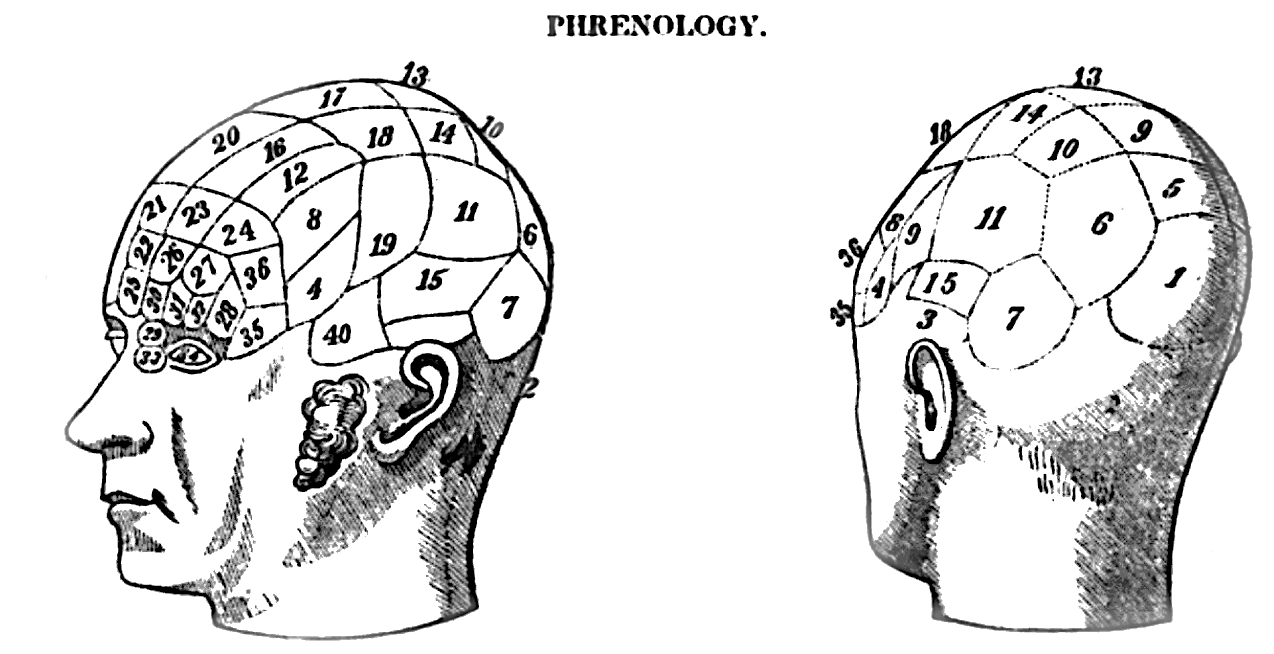
Brain talk in a popular magazine, 1830s. Notice what it is doing: not explaining a mechanism but licensing a conclusion about a person. Two centuries on, most of what is sold as neuroscience to parents and teachers is doing the same job.Source: AnonymousUnknown author — Public domain, Wikimedia Commons
The question worth asking is: when a person — child or adult — learns a little about how the brain works, what actually changes?
The answer is not tidy. It cuts in two opposite directions, and most of what is sold to you sits on the bad one.
The useful direction: knowing the brain changes
Start with the most famous study in the field.
Blackwell, Trzesniewski and Dweck (2007) followed students across a school transition and found that those who believed intelligence could grow outperformed those who believed it fixed. They then ran an intervention: one group was taught about neuroplasticity — that the brain forms new connections with practice. That group’s grades improved relative to controls.
This is the root of the entire growth-mindset industry you have heard of. And it is also where a very large honest note is required.
The honest note: growth mindset is smaller than you were told
In the fifteen years after that study the idea spread worldwide, usually in badly oversimplified form. Then the large-scale tests arrived.
Sisk and colleagues (2018) conducted two meta-analyses. The finding: the association between growth mindset and achievement is very weak (correlations around 0.10), and intervention effects are close to zero for most students. Macnamara and Burgoyne (2023) reviewed the field systematically and reached a still more cautious conclusion.
But the story does not stop there, and this is the interesting part.
Yeager and colleagues (2019) published a national experiment in Nature with 12,490 students across 65 randomly selected schools — the best design the question has ever had. They found a real but small effect, and crucially: it was concentrated among lower-achieving students, and appeared only in schools whose peer norms supported taking on hard work.
That is the honest picture. Teaching a child that their brain can change is not a magic switch. It is a small, cheap intervention with a modest effect, most useful for the child who currently believes they are congenitally stupid.
It is still worth doing. It is not worth charging tuition for.
What actually changes outcomes: knowing you fool yourself
If knowledge of the brain has one place where it genuinely makes a difference, it is here — and it gets discussed far less because it is unglamorous.
Bjork, Dunlosky and Kornell (2013) reviewed a body of work showing that learners systematically misjudge what is working. The chief mechanism is the fluency illusion: when material reads easily, we take that to mean we have it. But that ease measures familiarity, not later recall.
Kornell and Bjork (2007) showed that when free to choose, learners repeatedly pick methods that feel better and perform worse.
The sharpest number comes from Karpicke, Butler and Roediger (2009). They asked university students what they do when studying alone. Only about 11% chose self-testing. The overwhelming majority reread — the least effective of the common methods.
Dunlosky and colleagues (2013) ranked ten study techniques by evidence and concluded the two strongest are practice testing and distributed practice — while the two most popular are rereading and highlighting, both rated low.
This is what brain knowledge is genuinely worth: not knowing which region lights up, but knowing that the pleasant feeling of studying is an unreliable signal. It changes behaviour immediately, and it is free.
The harmful direction: why brain rescues bad explanations
Now the uncomfortable part.
Weisberg and colleagues (2008) gave participants explanations of psychological phenomena — some good, some bad. Then they added one sentence of entirely irrelevant neuroscience, of the this process occurs in the frontal cortex kind.
The result: for non-experts, that superfluous neuroscience made the bad explanations markedly more satisfying. It did nothing for the good ones — it only rescued the poor ones.
Weisberg, Taylor and Hopkins (2015) replicated and probed it further, confirming the effect is specific to neuroscience rather than to science generally.
This is precisely the sales mechanism of most of the early-education market. A course does not say our method works; it says our method activates the right hemisphere. The second sentence contains no additional information, but it feels truer.
An honest note attaches. McCabe and Castel (2008) reported that merely placing a brain image beside an article raised ratings of its reasoning. That study has been cited heavily — but Michael and colleagues (2013), across multiple large-sample experiments, found essentially no effect. So: neuroscience prose does persuade; brain pictures probably do not.
Knowing more neuroscience does not mean believing fewer myths
This is the most counter-intuitive finding in the whole piece.
Dekker and colleagues (2012) surveyed hundreds of teachers in the UK and the Netherlands on neuromyths. They found high endorsement rates — and something nobody predicted:
Teachers with more general neuroscience knowledge endorsed more myths, not fewer.
The explanation offered is persuasive: people interested in the brain read more about the brain, and most popular writing about the brain is wrong. The interest delivers both at once.
Macdonald and colleagues (2017) resurveyed with a much larger sample and found that specialist training does reduce myth belief — but does not eliminate it. Even among those with neuroscience backgrounds, endorsement of the learning-styles myth remained high.
Howard-Jones (2014), writing in Nature Reviews Neuroscience, called this the central problem of bringing neuroscience into education: the gap between laboratory and classroom does not get filled with the findings but with distorted simplifications of them.
The most expensive myth: learning styles
The idea that each person has a learning style — visual, auditory, kinaesthetic — and learns better when taught in it, is the most widespread myth in education worldwide.
Pashler and colleagues (2008) reviewed the literature and concluded that almost no studies had been designed correctly to test the meshing hypothesis — and that among the few that had, results were negative. Rogowsky, Calhoun and Tallal (2015) ran a direct test: sort learners by stated preference, then teach in matched or mismatched modes. No advantage for the matched groups.
A distinction matters: preferences are real. People genuinely prefer one mode to another. What lacks evidence is that indulging the preference improves learning.
And the harm is concrete. When a child is labelled you’re a visual learner, they acquire a ready excuse to avoid the difficult thing. Telling a child they are not a language person hands them a self-fulfilling prophecy.
The second myth: brain training
Brain-training games promise that drilling working memory daily makes you generally cleverer.
Owen and colleagues (2010) tested this in Nature with 11,430 participants training over six weeks. The result: people improved at the specific tasks they trained on, with no transfer to other cognitive abilities — not even to closely related tasks.
Simons and colleagues (2016) reviewed the whole literature at length and concluded that evidence for far transfer is very weak, despite the industry’s billions.
For a language learner the implication is direct: you do not need to train your brain to learn better. You need to practise the thing you want to be good at. Near transfer exists; far transfer largely does not.
Neuroplasticity: real, and bounded
After all that caution, it is worth saying plainly which part is true — because it is true and it is beautiful.
Maguire and colleagues (2000) scanned London taxi drivers, who must memorise thousands of streets to pass The Knowledge. They found the posterior hippocampus larger in drivers than in controls, with size correlating with years on the job. Adult brains change structurally according to what they do.
Draganski and colleagues (2004), in Nature, had adults learn to juggle for three months and measured grey matter before and after. A real, measurable change appeared.
But the second half of that study is cited far less often, and it is the honest half: when participants stopped practising, the added grey matter regressed.
That is the complete picture. The brain changes with what you do — and it changes back when you stop. Plasticity is not a switch thrown once; it is a state maintained by use.
For children: what to say and what not to
Do say that the brain builds new connections when you practise something hard, and that the feeling of difficulty is what that process feels like. This is the best-supported part, and per Yeager it helps most the child who thinks they are stupid.
Do say that the sense of I understand this while rereading is untrustworthy, and that the only way to know whether you remember is to close the book and try.
Do not sayyou’re a visual learner, or any other label. Labels narrow, and there is no evidence behind this one.
Do not sayyou’re right-brained, so you’re artistic. Hemispheric specialisation is real at a fine grain; the idea that a person belongs to a hemisphere is not.
Do not sayyour brain finished developing at six. That claim sells a great deal and is false — the prefrontal cortex continues maturing into the mid-twenties.
For adults: three things worth knowing, and only three
If you want brain knowledge that genuinely changes how you learn, these three do it. The rest is largely entertainment.
One: comfortable is not learning. The fluency illusion is the main enemy. If a session runs smoothly, be suspicious.
Two: recall beats review. This is the firmest conclusion in learning science and the most ignored — only 11% of learners choose it unprompted.
Three: spacing beats massing. The same total time, split up, retains longer.
None of these needs a single scan to stand up. And they change behaviour from tonight.
How to spot a dubious brain claim
It uses activates without saying so what. Every mental act activates something. The sentence carries no information.
It sorts people into types. Left-brained, visual learner, high-EQ child. Neurobiology does not classify people that neatly.
It mentions a closing golden window. Sensitive periods are real, chiefly for vision and speech sounds. They get stretched to cover everything, to manufacture urgency.
It is selling something. This is the most reliable of the four.
What actually changes
The title’s question has an unglamorous answer.
Knowing neuroscience changes thinking in two very unequal directions. The useful direction is narrow: about three facts concerning memory and one concerning plasticity, all of them dull and all immediately usable. The harmful direction is broad: a whole industry built on the fact that the word brain makes empty explanations sound full.
And the most memorable finding in this literature remains Dekker’s: the people who knew more about the brain believed more myths. Interest does not protect you. Only the habit of asking what is the evidence does that.
For a child, what is worth teaching is not a map of brain regions. It is the idea that their mind changes according to what they do, that difficulty is the feeling of it changing, and that when someone says something that sounds very scientific, they are allowed to ask why anyone believes it.
That is the brain knowledge worth passing on. The rest should be read the way one reads the news: interesting, and to be checked.
Read the simple version
The same article, told in plain words — for younger readers, or for anyone who wants the point quickly.
Over twenty years the word brain has travelled from the laboratory onto milk cartons, tuition-centre flyers and parents' evenings.
The question worth asking is: when a person — child or adult — learns a little about how the brain works, what actually changes?
The answer is not tidy. It cuts in two opposite directions, and most of what is sold to you sits on the bad one.
The useful direction: knowing the brain changes
Blackwell, Trzesniewski and Dweck (2007) followed students across a school transition and found that those who believed intelligence could grow outperformed those who believed it fixed. They then ran an intervention: one group was taught about neuroplasticity — that the brain forms new connections with practice. That group's grades improved relative to controls.
This is the root of the entire growth-mindset industry you have heard of. And it is also where a very large honest note is required.
The honest note: growth mindset is smaller than you were told
In the fifteen years after that study the idea spread worldwide, usually in badly oversimplified form. Then the large-scale tests arrived.
Sisk and colleagues (2018) conducted two meta-analyses. The finding: the association between growth mindset and achievement is very weak (correlations around 0.10), and intervention effects are close to zero for most students. Macnamara and Burgoyne (2023) reviewed the field systematically and reached a still more cautious conclusion.
But the story does not stop there, and this is the interesting part.
Yeager and colleagues (2019) published a national experiment in Nature with 12,490 students across 65 randomly selected schools — the best design the question has ever had. They found a real but small effect, and crucially: it was concentrated among lower-achieving students, and appeared only in schools whose peer norms supported taking on hard work.
That is the honest picture. Teaching a child that their brain can change is not a magic switch. It is a small, cheap intervention with a modest effect, most useful for the child who currently believes they are congenitally stupid.
It is still worth doing. It is not worth charging tuition for.
What actually changes outcomes: knowing you fool yourself
If knowledge of the brain has one place where it genuinely makes a difference, it is here — and it gets discussed far less because it is unglamorous.
Bjork, Dunlosky and Kornell (2013) reviewed a body of work showing that learners systematically misjudge what is working. The chief mechanism is the fluency illusion: when material reads easily, we take that to mean we have it. But that ease measures familiarity, not later recall.
Kornell and Bjork (2007) showed that when free to choose, learners repeatedly pick methods that feel better and perform worse.
The sharpest number comes from Karpicke, Butler and Roediger (2009). They asked university students what they do when studying alone. Only about 11% chose self-testing. The overwhelming majority reread — the least effective of the common methods.
Dunlosky and colleagues (2013) ranked ten study techniques by evidence and concluded the two strongest are practice testing and distributed practice — while the two most popular are rereading and highlighting, both rated low.
This is what brain knowledge is genuinely worth: not knowing which region lights up, but knowing that the pleasant feeling of studying is an unreliable signal. It changes behaviour immediately, and it is free.
The harmful direction: why brain rescues bad explanations
Weisberg and colleagues (2008) gave participants explanations of psychological phenomena — some good, some bad. Then they added one sentence of entirely irrelevant neuroscience, of the this process occurs in the frontal cortex kind.
The result: for non-experts, that superfluous neuroscience made the bad explanations markedly more satisfying. It did nothing for the good ones — it only rescued the poor ones. Weisberg, Taylor and Hopkins (2015) replicated and confirmed the effect is specific to neuroscience rather than to science generally.
This is precisely the sales mechanism of most of the early-education market. A course does not say our method works; it says our method activates the right hemisphere. The second sentence contains no additional information, but it feels truer.
An honest note attaches. McCabe and Castel (2008) reported that merely placing a brain image beside an article raised ratings of its reasoning. That study has been cited heavily — but Michael and colleagues (2013), across multiple large-sample experiments, found essentially no effect. So: neuroscience prose does persuade; brain pictures probably do not.
Knowing more neuroscience does not mean believing fewer myths
This is the most counter-intuitive finding in the whole piece.
Dekker and colleagues (2012) surveyed hundreds of teachers in the UK and the Netherlands on neuromyths. They found high endorsement rates — and something nobody predicted:
Teachers with more general neuroscience knowledge endorsed more myths, not fewer.
The explanation offered is persuasive: people interested in the brain read more about the brain, and most popular writing about the brain is wrong. The interest delivers both at once.
Macdonald and colleagues (2017) resurveyed with a much larger sample and found that specialist training does reduce myth belief — but does not eliminate it. Even among those with neuroscience backgrounds, endorsement of the learning-styles myth remained high.
Howard-Jones (2014), writing in Nature Reviews Neuroscience, called this the central problem of bringing neuroscience into education: the gap between laboratory and classroom does not get filled with the findings but with distorted simplifications of them.
The most expensive myth: learning styles
The idea that each person has a learning style — visual, auditory, kinaesthetic — and learns better when taught in it, is the most widespread myth in education worldwide.
Pashler and colleagues (2008) reviewed the literature and concluded that almost no studies had been designed correctly to test the meshing hypothesis — and that among the few that had, results were negative. Rogowsky, Calhoun and Tallal (2015) ran a direct test: sort learners by stated preference, then teach in matched or mismatched modes. No advantage for the matched groups.
A distinction matters: preferences are real. People genuinely prefer one mode to another. What lacks evidence is that indulging the preference improves learning.
And the harm is concrete. When a child is labelled you're a visual learner, they acquire a ready excuse to avoid the difficult thing. Telling a child they are not a language person hands them a self-fulfilling prophecy.
The second myth: brain training
Brain-training games promise that drilling working memory daily makes you generally cleverer.
Owen and colleagues (2010) tested this in Nature with 11,430 participants training over six weeks. The result: people improved at the specific tasks they trained on, with no transfer to other cognitive abilities — not even to closely related tasks. Simons and colleagues (2016) reviewed the whole literature and concluded that evidence for far transfer is very weak, despite the industry's billions.
For a language learner the implication is direct: you do not need to train your brain to learn better. You need to practise the thing you want to be good at. Near transfer exists; far transfer largely does not.
Neuroplasticity: real, and bounded
After all that caution, it is worth saying plainly which part is true — because it is true and it is beautiful.
Maguire and colleagues (2000) scanned London taxi drivers, who must memorise thousands of streets to pass The Knowledge. They found the posterior hippocampus larger in drivers than in controls, with size correlating with years on the job. Adult brains change structurally according to what they do.
Draganski and colleagues (2004), in Nature, had adults learn to juggle for three months and measured grey matter before and after. A real, measurable change appeared.
But the second half of that study is cited far less often, and it is the honest half: when participants stopped practising, the added grey matter regressed.
That is the complete picture. The brain changes with what you do — and it changes back when you stop. Plasticity is not a switch thrown once; it is a state maintained by use.
For children: what to say and what not to
Do say that the brain builds new connections when you practise something hard, and that the feeling of difficulty is what that process feels like. This is the best-supported part, and per Yeager it helps most the child who thinks they are stupid.
Do say that the sense of I understand this while rereading is untrustworthy, and that the only way to know whether you remember is to close the book and try.
Do not sayyou're a visual learner, or any other label. Labels narrow, and there is no evidence behind this one.
Do not sayyou're right-brained, so you're artistic. Hemispheric specialisation is real at a fine grain; the idea that a person belongs to a hemisphere is not.
Do not sayyour brain finished developing at six. That claim sells a great deal and is false — the prefrontal cortex continues maturing into the mid-twenties.
For adults: three things worth knowing, and only three
One: comfortable is not learning. The fluency illusion is the main enemy. If a session runs smoothly, be suspicious.
Two: recall beats review. This is the firmest conclusion in learning science and the most ignored — only 11% of learners choose it unprompted.
Three: spacing beats massing. The same total time, split up, retains longer.
None of these needs a single scan to stand up. And they change behaviour from tonight.
How to spot a dubious brain claim
It uses activates without saying so what. Every mental act activates something. The sentence carries no information.
It sorts people into types. Left-brained, visual learner, high-EQ child. Neurobiology does not classify people that neatly.
It mentions a closing golden window. Sensitive periods are real, chiefly for vision and speech sounds. They get stretched to cover everything, to manufacture urgency.
It is selling something. This is the most reliable of the four.
What actually changes
The title's question has an unglamorous answer.
Knowing neuroscience changes thinking in two very unequal directions. The useful direction is narrow: about three facts concerning memory and one concerning plasticity, all of them dull and all immediately usable. The harmful direction is broad: a whole industry built on the fact that the word brain makes empty explanations sound full.
And the most memorable finding in this literature remains Dekker's: the people who knew more about the brain believed more myths. Interest does not protect you. Only the habit of asking what is the evidence does that.
For a child, what is worth teaching is not a map of brain regions. It is the idea that their mind changes according to what they do, that difficulty is the feeling of it changing, and that when someone says something that sounds very scientific, they are allowed to ask why anyone believes it.
That is the brain knowledge worth passing on. The rest should be read the way one reads the news: interesting, and to be checked.
Sources & further reading
These articles summarize well-established research in learning science and linguistics. Key sources and further reading:
Blackwell, L. S., Trzesniewski, K. H., & Dweck, C. S. (2007). Implicit theories of intelligence predict achievement across an adolescent transition: A longitudinal study and an intervention. Child Development, 78(1), 246–263.
Sisk, V. F., Burgoyne, A. P., Sun, J., Butler, J. L., & Macnamara, B. N. (2018). To what extent and under which circumstances are growth mind-sets important to academic achievement? Two meta-analyses. Psychological Science, 29(4), 549–571.
Yeager, D. S., Hanselman, P., Walton, G. M., et al. (2019). A national experiment reveals where a growth mindset improves achievement. Nature, 573, 364–369.
Macnamara, B. N., & Burgoyne, A. P. (2023). Do growth mindset interventions impact students’ academic achievement? A systematic review and meta-analysis with recommendations for best practices. Psychological Bulletin, 149(3–4), 133–173.
Bjork, R. A., Dunlosky, J., & Kornell, N. (2013). Self-regulated learning: Beliefs, techniques, and illusions. Annual Review of Psychology, 64, 417–444.
Kornell, N., & Bjork, R. A. (2007). The promise and perils of self-regulated study. Psychonomic Bulletin & Review, 14(2), 219–224.
Karpicke, J. D., Butler, A. C., & Roediger, H. L. (2009). Metacognitive strategies in student learning: Do students practise retrieval when they study on their own? Memory, 17(4), 471–479.
Dunlosky, J., Rawson, K. A., Marsh, E. J., Nathan, M. J., & Willingham, D. T. (2013). Improving students’ learning with effective learning techniques: Promising directions from cognitive and educational psychology. Psychological Science in the Public Interest, 14(1), 4–58.
Weisberg, D. S., Keil, F. C., Goodstein, J., Rawson, E., & Gray, J. R. (2008). The seductive allure of neuroscience explanations. Journal of Cognitive Neuroscience, 20(3), 470–477.
Weisberg, D. S., Taylor, J. C. V., & Hopkins, E. J. (2015). Deconstructing the seductive allure of neuroscience explanations. Judgment and Decision Making, 10(5), 429–441.
McCabe, D. P., & Castel, A. D. (2008). Seeing is believing: The effect of brain images on judgments of scientific reasoning. Cognition, 107(1), 343–352.
Michael, R. B., Newman, E. J., Vuorre, M., Cumming, G., & Garry, M. (2013). On the (non)persuasive power of a brain image. Psychonomic Bulletin & Review, 20(4), 720–725.
Dekker, S., Lee, N. C., Howard-Jones, P., & Jolles, J. (2012). Neuromyths in education: Prevalence and predictors of misconceptions among teachers. Frontiers in Psychology, 3, 429.
Macdonald, K., Germine, L., Anderson, A., Christodoulou, J., & McGrath, L. M. (2017). Dispelling the myth: Training in education or neuroscience decreases but does not eliminate beliefs in neuromyths. Frontiers in Psychology, 8, 1314.
Howard-Jones, P. A. (2014). Neuroscience and education: Myths and messages. Nature Reviews Neuroscience, 15(12), 817–824.
Pashler, H., McDaniel, M., Rohrer, D., & Bjork, R. (2008). Learning styles: Concepts and evidence. Psychological Science in the Public Interest, 9(3), 105–119.
Rogowsky, B. A., Calhoun, B. M., & Tallal, P. (2015). Matching learning style to instructional method: Effects on comprehension. Journal of Educational Psychology, 107(1), 64–77.
Owen, A. M., Hampshire, A., Grahn, J. A., et al. (2010). Putting brain training to the test. Nature, 465, 775–778.
Simons, D. J., Boot, W. R., Charness, N., et al. (2016). Do "brain-training" programs work? Psychological Science in the Public Interest, 17(3), 103–186.
Maguire, E. A., Gadian, D. G., Johnsrude, I. S., et al. (2000). Navigation-related structural change in the hippocampi of taxi drivers. PNAS, 97(8), 4398–4403.
Draganski, B., Gaser, C., Busch, V., Schuierer, G., Bogdahn, U., & May, A. (2004). Changes in grey matter induced by training. Nature, 427, 311–312.