Which Part of the Brain Works Hardest When You Learn a Language?
There is no single language centre. Learning a language is a whole-brain team effort — but the real stars for a learner are the two memory systems: the declarative (words) and the procedural (grammar becoming automatic). What that means for how to learn.
It is tempting to picture a single language centre in the head, lighting up as you study a new tongue. The reality is richer and more useful. Learning a language is one of the most demanding, whole-brain things a person can do — but a few regions carry the heaviest load, and which ones, and when, quietly explains almost everything about how to learn well.
The obvious players: the language network
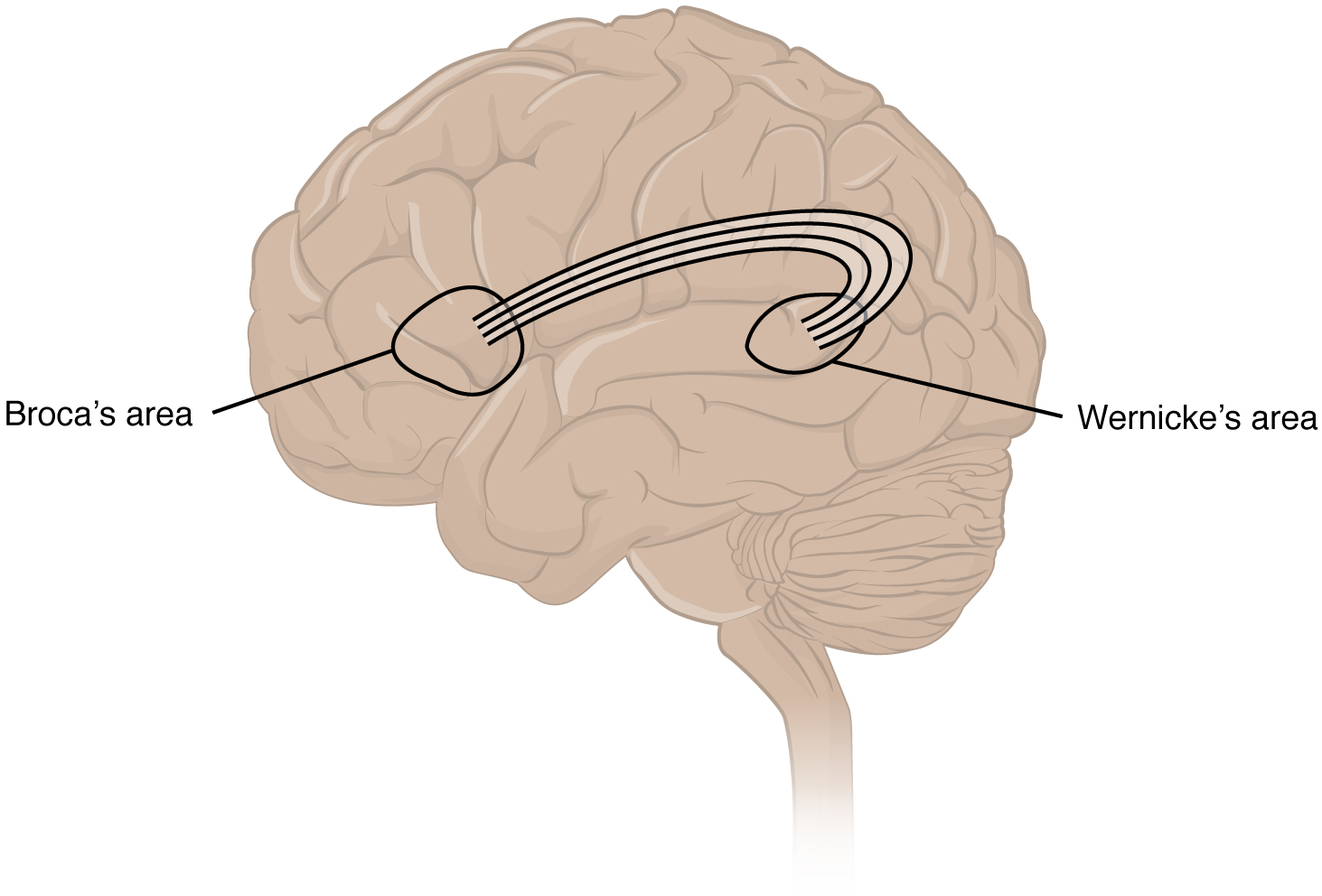
Two regions, both usually on the left side of the brain, have been linked to language for over a century. Broca's area, near the front, helps produce speech and handle grammar; Wernicke's area, further back, helps map sound onto meaning so you understand. A thick bundle of fibres joins them. This network is what you use to speak and comprehend a language you already know. But learning one calls on much more — because before you can use language, you have to remember it.
The two regions named in the nineteenth century, both from patients who had lost something. Broca's man could understand but barely speak; Wernicke's could speak fluently and mean nothing.Source: OpenStax College — CC BY 3.0, Wikimedia Commons
The real stars of learning: two memory systems
Here is the key that unlocks the whole picture. Your brain has two great memory systems, and language learning leans on both — but for different jobs.
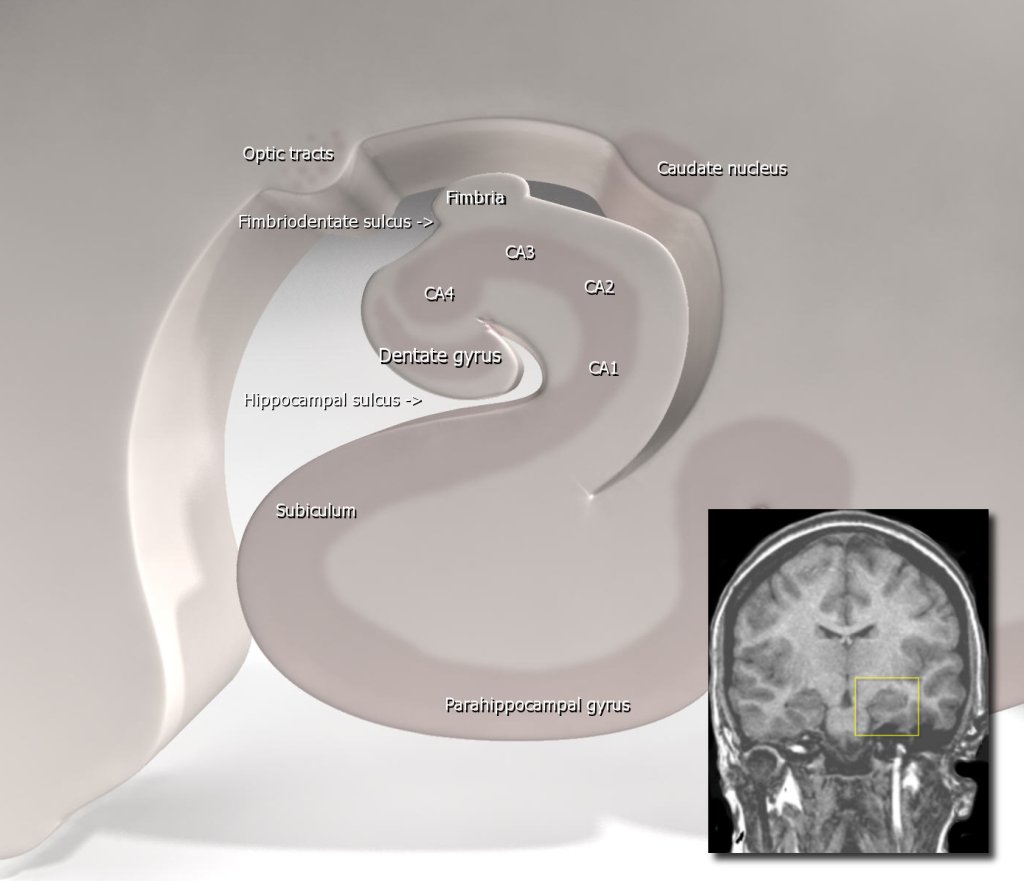
The declarative system, centred on the hippocampus, is your memory for facts and events — and for words. Every new word you learn is first captured here, consciously and effortfully, the way you would memorise a name or a phone number. In the early stages of a language, this system does enormous work; a beginner is, above all, a person building thousands of new declarative memories.
The hippocampus. New words arrive here first and are only later handed over to the cortex — which is why sleeping between study sessions is not lost time.Source: Fg, contact:frank.gaillard@gmail.com — CC BY-SA 3.0, Wikimedia Commons
The procedural system, centred on deep structures called the basal ganglia, is your memory for skills and habits — riding a bicycle, touch-typing, and, remarkably, grammar. As you practise a language, its grammar gradually migrates out of the effortful declarative system and into this automatic one. That migration is not a side effect of fluency; it is fluency. To become fluent is to move a language from something you consciously recall into something your brain simply does.
The supporting cast
Around these leads works a whole crew. The prefrontal cortex holds new sounds and words in working memory while you wrestle with them, steers your attention, and — in bilinguals — keeps the languages from spilling into one another. The motor cortex and cerebellum handle the physical act of pronunciation, because a new accent is a motor skill, trained like any other. The reward system, running on dopamine, supplies the motivation and curiosity that decide what gets encoded at all. And the auditory and visual areas do the front-line work of hearing speech and reading script. It is, genuinely, a team effort.
So which is used most?
For a native speaker using a mastered language, the core language network hums along efficiently and cheaply. But for a learner, the balance tips toward the memory systems and the prefrontal cortex — because you are constantly forming new memories and controlling effortful, unfamiliar behaviour. Early on, the hippocampus and prefrontal cortex work overtime as you gather and juggle new material. With mastery, the load shifts: grammar settles into the automatic procedural system, and the whole thing becomes quieter and more efficient. The busiest part of your brain, in other words, changes as you improve.
What it all means
This is where the neuroscience turns practical, because each lead player points to something you can do.
Early learning is mostly a memory task. Since the declarative system is doing the heavy lifting at first, the science of memory is the science of early language learning: space your practice, retrieve instead of reread, sleep to consolidate, and learn words in context. Those methods work precisely because of which brain system they feed.
Fluency is automation, and automation comes only from doing. Because grammar becomes fluent by moving into the procedural system, and that system learns by practice rather than by explanation, you cannot memorise your way to fluency. Rules and word lists are the declarative down-payment; sheer use and input are what proceduralise them. This is why endless studying without practice leaves you stuck — the knowledge never crosses into the automatic system.
It explains the difference between children and adults. Adults have a powerful, mature declarative memory, so they excel at vocabulary and explicit rules — but their procedural system is stiffer, so grammar automates more slowly. The lesson is to use explicit study as a bridge, then practise hard to make it automatic. Children, whose procedural system is wide open, absorb grammar as effortless habit.
Motivation and attention are not extras. The reward and prefrontal systems act as gatekeepers on encoding, so caring about what you learn, and paying real attention, literally help the brain lay it down. And pronunciation, being a motor skill, needs physical practice, not just knowledge.
The takeaway
There is no single language part of the brain. Learning a language lights up a broad coalition — the classic language network to speak and understand, the prefrontal cortex to attend and control, the motor system to pronounce, the reward system to care, and, above all, the two memory systems that gather your words and then turn your grammar into instinct. And that is the deepest meaning of it: to learn a language is first to remember, and then to practise until remembering becomes doing. Feed the memory systems with spacing, sleep, and context; feed the skill system with use; and the whole coalition, working together, quietly builds a new language into your brain.
Read the simple version
The same article, told in plain words — for younger readers, or for anyone who wants the point quickly.
It is tempting to picture a single language centre in the head, lighting up as you study. The reality is richer, and far more useful to know.
The obvious players
Two regions, both usually on the left side, have been tied to language for over a century. One near the front helps you produce speech and handle grammar; one further back helps map sound onto meaning so you understand. A thick bundle of fibres joins them.
That network is what you use to speak a language you already know. But learning one calls on much more — because before you can use language, you have to remember it.
The real stars: two memory systems
This is the key that unlocks the whole picture.
The first system is your memory for facts — and for words. Every new word is captured here, consciously and effortfully, the way you would memorise a phone number. Early on, this system does enormous work. A beginner is, above all, a person building thousands of new memories.
The second system is your memory for skills and habits — riding a bicycle, touch-typing, and, remarkably, grammar. As you practise, a language's grammar gradually migrates out of the effortful first system and into this automatic one.
That migration is not a side effect of fluency. It is fluency. To become fluent is to move a language from something you consciously recall into something your brain simply does.
The supporting cast
The front of the brain holds new sounds in mind while you wrestle with them, steers your attention, and in bilinguals keeps the two languages from spilling into each other. The motor system handles the physical act of pronunciation — a new accent is a motor skill. And the reward system supplies the curiosity that decides what gets stored at all.
So which part works hardest?
It changes as you improve.
For a native speaker, the core language network hums along cheaply. For a learner, the load tips toward memory and attention, because you are constantly forming new memories and controlling unfamiliar behaviour. With mastery, grammar settles into the automatic system and the whole thing becomes quieter and more efficient.
Which tells you what to do
Early learning is mostly a memory task. So the science of memory is the science of early language learning: space your practice, recall instead of reread, sleep, and learn words in context. Those methods work precisely because of which system they feed.
Fluency is automation, and automation only comes from doing. Grammar becomes fluent by moving into the skills system, and that system learns by practice, not by explanation. You cannot memorise your way to fluency. Rules and word lists are the down-payment; use is what converts them.
It explains children and adults. An adult has a powerful, mature memory for facts, so they excel at vocabulary and rules — but their skills system is stiffer, so grammar automates more slowly. Use explicit study as a bridge, then practise hard to make it automatic.
Motivation and attention are not extras. Caring about what you learn literally helps the brain lay it down.
To learn a language is first to remember, and then to practise until remembering becomes doing.
Sources & further reading
These articles summarize well-established research in learning science and linguistics. Key sources and further reading:
Ullman, M. T. (2004). Contributions of memory circuits to language: The declarative/procedural model. Cognition.
Ullman, M. T. (2001). The neural basis of lexicon and grammar in first and second language: The declarative/procedural model. Bilingualism: Language and Cognition.
Hickok, G., & Poeppel, D. (2007). The cortical organization of speech processing. Nature Reviews Neuroscience.
Friederici, A. D. (2011). The brain basis of language processing: From structure to function. Physiological Reviews.
Davis, M. H., & Gaskell, M. G. (2009). A complementary systems account of word learning: Neural and behavioural evidence. Philosophical Transactions of the Royal Society B.

.jpg)