The Techniques That Actually Train Native-Like Pronunciation
Accent is a trainable, physical skill, not just talent. The science-backed techniques that genuinely move it: train the ear first, learn the articulation, master the music of stress and rhythm, connected speech, shadowing, record-and-compare, feedback, and input.
AI Aggregated source·July 30, 2026·5 min read·Words & skills
Of all the parts of a language, pronunciation is the one that most makes you sound native — or foreign. It is also the one most learners leave to chance, hoping it will simply arrive. It will not. But accent is not merely a matter of talent: it is a trainable, physical skill, and research points to a handful of techniques that genuinely move it. Here are the ones that matter most.
1. Train your ear before your mouth
You cannot reliably produce a sound you cannot hear. This is the first and most overlooked rule of pronunciation. Before you drill your speech, tune your perception — listen closely to the target sounds, especially the ones your own language does not have, and practise hearing the contrasts (the difference between ship and sheep, say). Studies show that training people to hear a foreign distinction improves their ability to say it, even without practising the saying. The ear leads; the mouth follows.
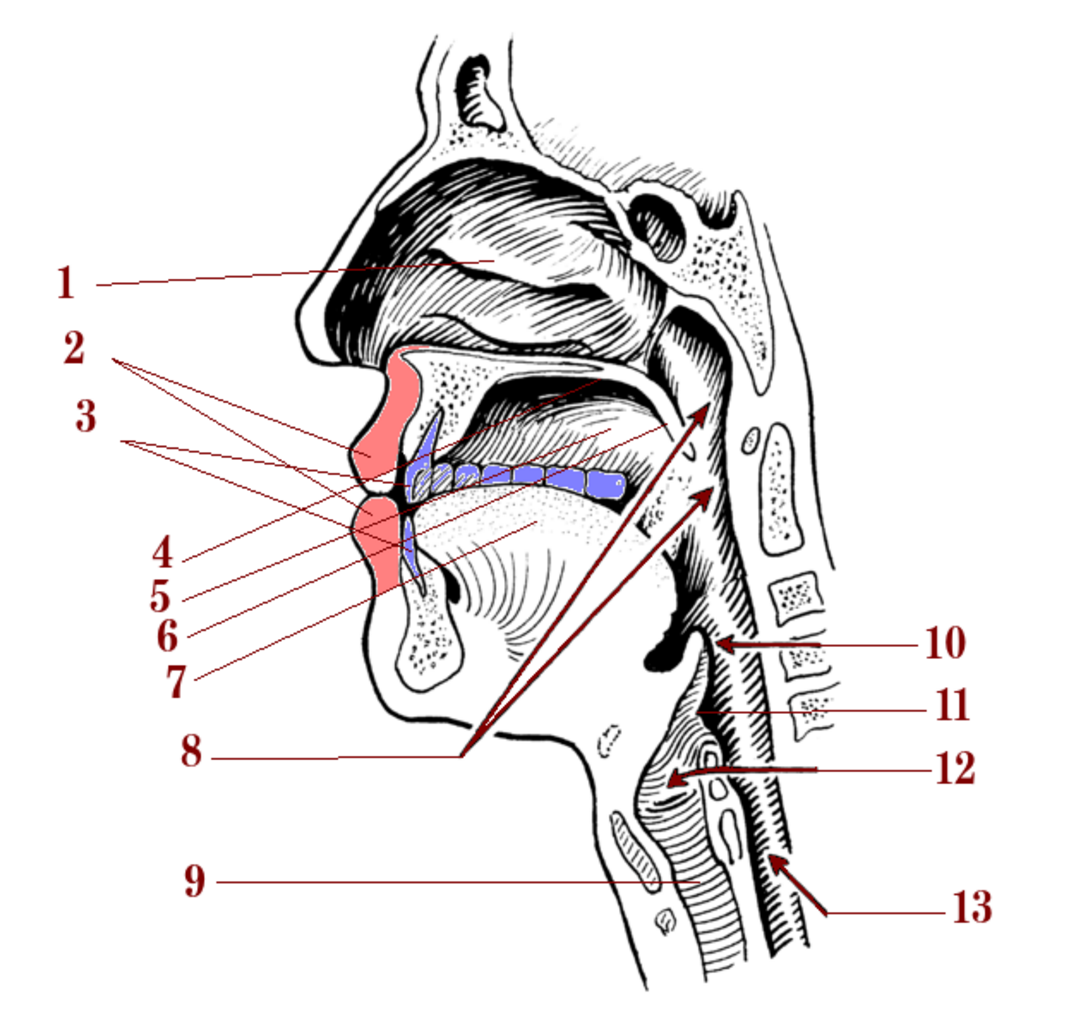
The instrument, in cross-section. Almost every sound a learner cannot make is made somewhere on this diagram they have never had to put their tongue — and once you can hear the difference, the picture tells you where to move it.Source: Obsuser — CC0, Wikimedia Commons
2. Learn how the sounds are made
Get to know the target language's inventory of sounds and — crucially — the physical articulation of the ones you lack: where the tongue goes, what the lips do, whether the sound is voiced. Understanding that a mysterious noise is really a specific movement turns it into something you can practise on purpose. An IPA chart, in this sense, is a map of your own mouth: it tells you exactly what to move, and how.
3. Master the music: stress, rhythm, and intonation
This is the most underrated technique of all. Individual sounds matter, but prosody — which syllables are stressed, the rhythm of the language, the rising and falling melody of a sentence — is often what most marks an accent, and what most decides whether you are understood. A learner with perfect vowels but flat, wrong rhythm still sounds foreign; a learner with imperfect vowels but the right music sounds remarkably native. Practise the stress and the melody of whole phrases, not just single sounds.
4. Learn connected speech
Native speakers do not talk word by careful word; they link, blend, and reduce. What are you doing becomes something like whaddaya doin. Learning how speech actually joins up — the linking, the weak forms, the swallowed syllables — is essential both to sounding natural and to understanding fast speech. Practising isolated words alone will never get you there.
5. Shadow a native model
Play a recording of a native speaker and talk along with it, running a half-second behind, copying not just the words but the rhythm, the melody, and the very shape of the mouth. Shadowing trains prosody, connected speech, and fluency all at once, and it is one of the most powerful pronunciation tools there is. Do it with a voice — a character, a presenter — that you genuinely enjoy, and you will do far more of it.
6. Record yourself and compare
Here is an uncomfortable truth: you do not hear your own voice accurately while you are speaking. So record it. Say the same line as a native model, play the two back to back, and hunt for the gap between them. This simple feedback loop — produce, compare, adjust — is where a great deal of the real improvement quietly happens, because you can only fix what you can finally hear.
7. Get feedback, and use your eyes
Pronunciation is a motor skill, and motor skills are trained by feedback — from a teacher, from a pronunciation app that listens and scores you, or from your own recordings. Build that feedback in deliberately. And do not only listen: watch native mouths as they speak, because seeing how a sound is shaped helps you shape it. In the early days, exaggerate the new movements; a sound that feels absurdly overdone to you usually sounds just right to a native.
8. Drown in natural input
Underneath all the deliberate drills sits the quiet engine: sheer quantity of listening to natural speech. It tunes your ear, teaches you the music by osmosis, and gently pulls your own pronunciation toward what you hear the most — especially the voices you love and return to. Technique sharpens the accent; input grows it.
An honest word
One caveat, so you can aim well. For an adult, a flawless native accent is genuinely hard to reach — it is a matter of biology as much as effort, the legacy of an early sensitive period for speech sounds. But that is rarely the real goal, and it need not be. Clear, natural, confidently native-like pronunciation — easily understood, pleasant to listen to — is well within reach, and it is what these techniques deliver. The last few per cent of a perfect accent is the hardest, and doing without it costs you almost nothing.
The through-line
Two ideas tie every technique together. The first: the ear leads the mouth — perceive a sound before you try to produce it. The second: it is a motor skill — the muscles learn only by moving, again and again, with feedback. Train the ear, understand the movements, drill the music and the connections, shadow and record and seek correction, and bathe in the sound of the language. Do that patiently over months, and your pronunciation will move, unmistakably and physically, toward the native voice you are chasing.
Read the simple version
The same article, told in plain words — for younger readers, or for anyone who wants the point quickly.
Pronunciation is the part of a language that most makes you sound native — or foreign. It is also the part most learners leave to chance, hoping it will simply arrive.
It will not. But an accent is not a matter of talent. It is a physical skill you can train.
1. Train your ear before your mouth
You cannot reliably produce a sound you cannot hear. This is the first rule, and the most overlooked.
Before drilling your speech, tune your listening — especially for the sounds your own language does not have (ship against sheep). Studies show that training people to hear a foreign distinction improves their ability to say it, even without practising the saying.
The ear leads. The mouth follows.
2. Learn how the sound is made
Find out what your mouth actually has to do: where the tongue goes, what the lips do, whether the voice is on.
Understanding that a mysterious noise is really a specific movement turns it into something you can practise on purpose. An IPA chart, in this sense, is a map of your own mouth.
3. Master the music
This is the most underrated technique of all.
Individual sounds matter, but which syllables are stressed, the rhythm, the rise and fall of a sentence — that is often what marks an accent most, and what decides whether you are understood.
A learner with perfect vowels but flat, wrong rhythm still sounds foreign. A learner with imperfect vowels but the right music sounds remarkably native.
4. Learn how speech joins up
Native speakers do not talk word by careful word. They link, blend and swallow. What are you doing comes out closer to whaddaya doin.
Learning how speech actually runs together is essential both to sounding natural and to understanding fast speech. Practising isolated words will never get you there.
5. Shadow a voice you love
Play a native recording and talk along with it, half a second behind, copying not just the words but the rhythm, the melody, the shape of the mouth.
Do this with a voice you genuinely enjoy — a character, a presenter — and you will do far more of it.
6. Record yourself
Here is an uncomfortable truth: you do not hear your own voice accurately while you are speaking.
So record it. Say the same line as a native model, play the two back to back, and hunt for the gap. Produce, compare, adjust. A great deal of real improvement happens here, because you can only fix what you can finally hear.
7. Use your eyes, and exaggerate
Watch native mouths as they speak. Seeing how a sound is shaped helps you shape it.
And early on, overdo the new movements. A sound that feels absurdly exaggerated to you usually sounds just right to a native.
8. Drown in natural speech
Under all the drills sits the quiet engine: sheer quantity of listening. It tunes your ear, teaches you the music without lessons, and pulls your own pronunciation toward what you hear most.
Technique sharpens an accent. Input grows it.
An honest word about the goal
For an adult, a flawless native accent is genuinely hard to reach — that is biology as much as effort.
But it is rarely the real goal, and it need not be. Clear, natural, confident pronunciation — easily understood, pleasant to listen to — is well within reach. The last few per cent of a perfect accent is the hardest, and doing without it costs you almost nothing.
Sources & further reading
These articles summarize well-established research in learning science and linguistics. Key sources and further reading:
Bradlow, A. R., Pisoni, D. B., Akahane-Yamada, R., & Tohkura, Y. (1997). Training Japanese listeners to identify English /r/ and /l/: Some effects of perceptual learning on speech production. Journal of the Acoustical Society of America.
Flege, J. E. (1995). Second language speech learning: Theory, findings, and problems. In W. Strange (Ed.), Speech Perception and Linguistic Experience.
Derwing, T. M., & Munro, M. J. (2005). Second language accent and pronunciation teaching: A research-based approach. TESOL Quarterly.
Celce-Murcia, M., Brinton, D. M., & Goodwin, J. M. (2010). Teaching Pronunciation (2nd ed.). Cambridge University Press.
Foote, J. A., & McDonough, K. (2017). Using shadowing with mobile technology to improve L2 pronunciation. Journal of Second Language Pronunciation.