Will the Language Classroom Return to Traditional Methods to Protect Attention?
After two decades of more screens and more apps, a counter-current is visible: paper notebooks, phone-free rooms, deep reading returning. Not from nostalgia but from a crisis of attention. What the traditional toolkit got right, why it is not a simple journey back, and why the real variable is attention and depth — not old versus new.
For two decades the direction of travel in language teaching felt settled: more technology, more screens, more apps, more gamification. Yet a quiet counter-current is now visible in classrooms and schools around the world — paper notebooks returning, phones locked away, textbooks reopened, quiet sustained reading making a comeback. It raises a real question: after all the digital enthusiasm, will the language classroom ultimately swing back toward traditional methods, simply in order to protect the one resource everything else depends on — attention?
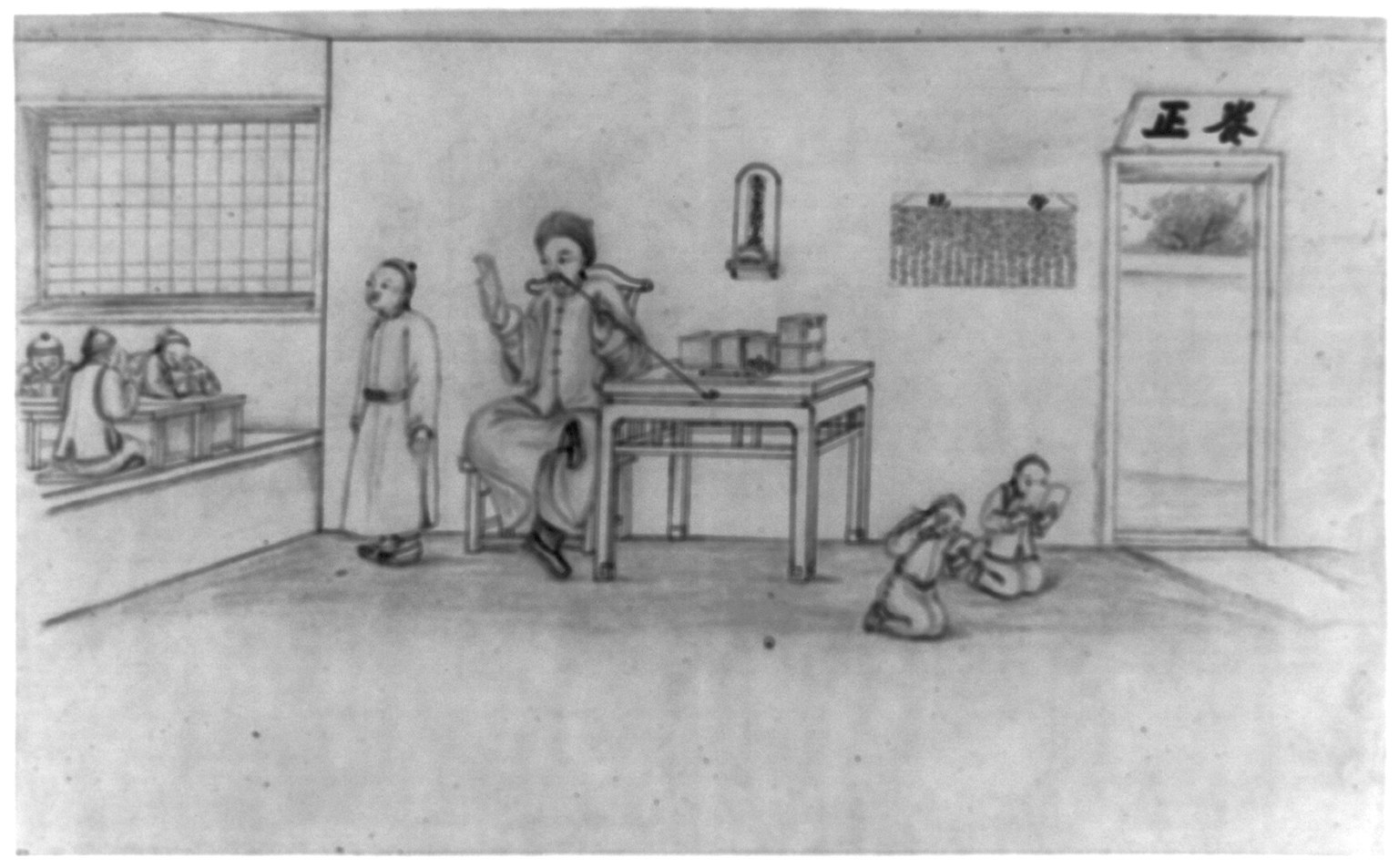
A classroom with no technology in it at all. The case for looking again at older methods is not nostalgia — it is that this room had one thing the newer ones keep losing, which is a single place for everyone's attention to be.Source: I︠U︡din, G. V. (Gennadiĭ Vasilʹevich), 1840-1912, collector; Yudin Collection (Library of Congress) DLC — Public domain, Wikimedia Commons
Why the question is being asked at all
The honest answer to why traditional is suddenly appealing is not nostalgia; it is a crisis of attention. Modern devices are engineered to fragment focus — notifications, feeds, and endless novelty compete for the mind every few seconds. And a decade of research suggests this has a cost for learning. Students who use laptops in class tend to learn less, and — strikingly — so do the peers sitting near them, distracted by the screens in view (Sana and colleagues). Heavy media multitaskers show measurable differences in sustained attention and memory (Uncapher and Wagner). Writers like Nicholas Carr and the reading scientist Maryanne Wolf have argued that a life of skimming and hyperlink-hopping quietly reshapes the brain away from the deep, linear, sustained reading that real comprehension requires. The classroom did not invent this problem, but it inherited it — and language learning, of all subjects, cannot afford it.
What the traditional toolkit got right
Look closely at the old methods now being revisited and you find that many of them are, in effect, attention-protection technologies — and the science is often on their side.
Handwriting. Taking notes by hand, rather than typing, was found to improve understanding and retention — the classic pen is mightier than the keyboard result — apparently because writing by hand is slower and forces you to process and reword rather than transcribe. (Later replications have been mixed, so the effect is real but not a magic bullet.) Either way, a pen does one thing; a laptop does a thousand.
Deep reading of long texts. Sitting with a full chapter or story, uninterrupted, builds exactly the sustained, immersive reading that grows vocabulary and syntactic intuition in a second language. Skimming fragmented, linked text does not. A paper book, precisely because it cannot ping you, protects the deep-reading state.
Focused, single-tasking practice. Structured, teacher-led instruction, disciplined repetition, and quiet concentrated work all train the mind to hold attention on one thing for a stretch — which is itself a skill, and a fragile one. The distraction-free classroom is not old-fashioned; it is a deliberately engineered environment for focus.
The teacher as attention-steward. A present, human teacher does something no app does: they hold a room's attention, notice when it drifts, and pull it back. Much of the recent return to traditional is really a return to the human relationship at the centre of learning.
But it is not a simple journey back
Here is the important caution, because the story is easy to oversimplify into old good, new bad. It is not that clean.
Traditional language teaching had real failures of its own. Decades of grammar-translation drilling and silent rote produced learners who could parse a sentence but not order a coffee; the communicative and immersion revolutions happened for good reasons, and they genuinely improved the ability to use a language. Rolling the clock back wholesale would revive those weaknesses along with the strengths. Nor is technology the villain: a well-chosen recording gives learners native input a textbook never could, spaced-repetition tools make vocabulary stick, and authentic digital media brings the living language into the room. The problem was never screens as such — it was distraction, and the mistaking of constant novelty for engagement.
So the real variable is not old versus new. It is attention and depth. Some traditional practices protect them; some traditional practices (mindless rote) wasted them. Some technology destroys attention; some technology, used deliberately and sparingly, serves it. Sorting tools by that criterion — does this deepen focus or fracture it? — matters far more than sorting them by their date of invention.
Why language learning raises the stakes
Attention is the gateway to all learning, but second-language learning leans on it especially hard. Richard Schmidt's influential noticing work argues that we largely acquire what we consciously attend to in the input — the feature we notice is the feature that has a chance to stick. A distracted learner does not merely learn more slowly; they often fail to register the very forms and patterns that acquisition depends on. Add the deep reading that builds vocabulary, and the sustained listening that trains the ear, and it becomes clear why a fragmented, half-attending mind is so poorly suited to learning a language — and why protecting attention is not a nicety here but a foundation.
So — will it swing back?
Partly, and it already is — but not as nostalgia, and not all the way. The most likely destination is not a return to the grammar-translation classroom of the past but a synthesis: a classroom that consciously reclaims the attention-protective virtues of the old ways — phones away, paper and pen, long uninterrupted reading, quiet single-tasking, the human teacher at the centre — while keeping what modern methods genuinely do better, above all real communicative use and authentic input. What is really coming back is not a set of old techniques but an old priority: the conviction that deep, sustained, undivided attention is the precondition for learning anything well, and that a classroom's first job may be to defend it. The pendulum is correcting, as pendulums do — not toward the past, but toward focus. And in a world engineered to fracture attention, a room designed to protect it may turn out to be the most modern idea of all.
Read the simple version
The same article, told in plain words — for younger readers, or for anyone who wants the point quickly.
For twenty years the direction felt settled: more technology, more screens, more apps. Yet a quiet counter-current is now visible — paper notebooks returning, phones locked away, textbooks reopened, long silent reading coming back.
Is the language classroom swinging back to the old ways? And if so, why now?
The honest reason is not nostalgia
It is a crisis of attention.
Modern devices are engineered to fragment focus — notifications, feeds, endless novelty competing for the mind every few seconds. And a decade of research suggests this costs something.
Students who use laptops in class tend to learn less — and, strikingly, so do the peers sitting near them, distracted by screens merely in view. Heavy media multitaskers show measurable differences in sustained attention and memory.
What the old toolkit got right
Look closely at the old methods being revisited and many of them turn out to be attention-protection technologies.
Handwriting. Taking notes by hand rather than typing improves understanding and retention — apparently because writing is slower and forces you to process and reword rather than transcribe. (Later replications are mixed, so it is real but not magic.) Either way: a pen does one thing; a laptop does a thousand.
Deep reading of long texts. Sitting with a whole chapter, uninterrupted, builds the sustained reading that grows vocabulary and grammatical intuition. Skimming fragmented linked text does not. A paper book, precisely because it cannot ping you, protects that state.
Single-tasking. Quiet concentrated work trains the mind to hold attention on one thing for a stretch — which is itself a skill, and a fragile one.
The teacher as guardian of attention. A present human does what no app does: holds a room's attention, notices when it drifts, and pulls it back.
But it is not a simple journey back
The story is easy to oversimplify into old good, new bad. It is not that clean.
Traditional teaching had real failures. Decades of grammar drills and silent rote produced learners who could parse a sentence but not order a coffee. The communicative revolution happened for good reasons. Rolling the clock back wholesale would revive the weaknesses along with the strengths.
Nor is technology the villain. A good recording gives learners native speech a textbook never could; review apps make vocabulary stick; real digital media brings the living language into the room.
The problem was never screens as such. It was distraction — and the mistaking of constant novelty for engagement.
The real variable
Not old versus new. Attention and depth.
Some traditional practices protect them; some traditional practices (mindless rote) wasted them. Some technology destroys attention; some, used deliberately and sparingly, serves it.
Sorting tools by does this deepen focus or fracture it? matters far more than sorting them by their date of invention.
Why language raises the stakes
Attention is the gateway to all learning, but a second language leans on it especially hard: we largely acquire what we consciously attend to. The feature you notice is the feature that has a chance to stick.
A distracted learner does not merely learn more slowly. They often fail to register the very patterns that learning depends on.
So the pendulum is correcting — not toward the past, but toward focus. And in a world engineered to fracture attention, a room designed to protect it may turn out to be the most modern idea of all.
Sources & further reading
These articles summarize well-established research in learning science and linguistics. Key sources and further reading:
Mueller, P. A., & Oppenheimer, D. M. (2014). The pen is mightier than the keyboard: Advantages of longhand over laptop note taking. Psychological Science.
Sana, F., Weston, T., & Cepeda, N. J. (2013). Laptop multitasking hinders classroom learning for both users and nearby peers. Computers & Education.
Uncapher, M. R., & Wagner, A. D. (2018). Minds and brains of media multitaskers: Current findings and future directions. Proceedings of the National Academy of Sciences (PNAS).
Wolf, M. (2018). Reader, Come Home: The Reading Brain in a Digital World. Harper.
Carr, N. (2010). The Shallows: What the Internet Is Doing to Our Brains. W. W. Norton.
Schmidt, R. (1990). The role of consciousness in second language learning. Applied Linguistics.