Nearly nine teachers in ten believe that matching a lesson to a student’s learning style helps them learn. When the claim is tested properly, it does not hold — and in a language, believing it costs you the skill you most need.
AI Aggregated source·August 10, 2026·6 min read·Teaching & myths
Ask a room of teachers whether students learn better when the lesson is matched to their learning style, and nearly every hand goes up. A 2020 review pooled thirty-seven studies covering more than fifteen thousand educators across eighteen countries, and found that 89% of them believed it — among trainee teachers, the figure was higher still. Few ideas in education are held with such confidence. Almost none have been tested so often, or failed so consistently.
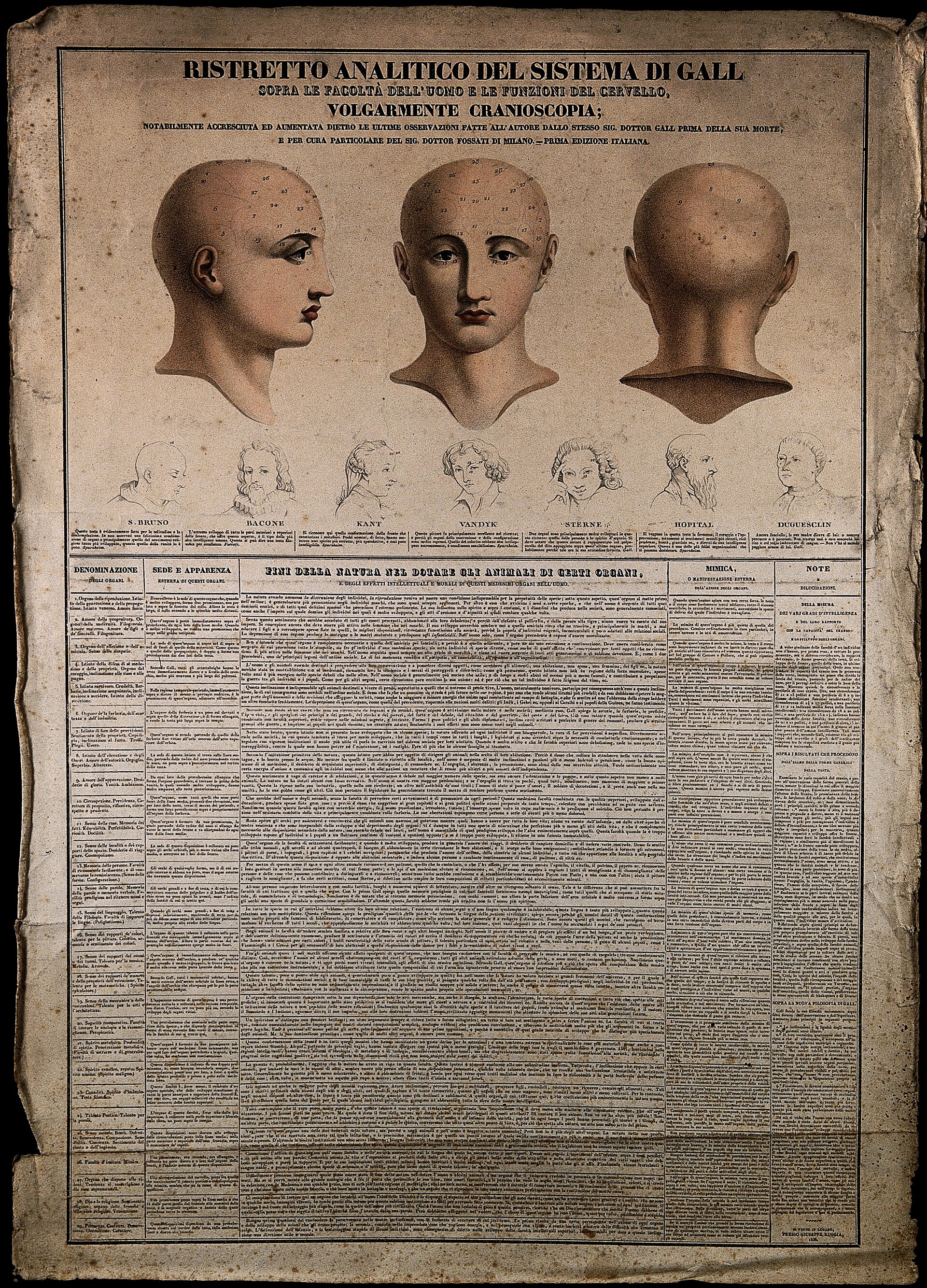
Phrenology looked exactly like science: a diagram, numbered regions, confident labels. It was wrong, and it took a century to shift because a tidy picture of the mind is worth more to people than an untidy finding. Learning styles have the same shape.Source: https://wellcomeimages.org/indexplus/obf_images/39/b2/91903d6eac3ef2c42c34ecd56752.jpg
Gallery: https://wellcomeimages.org/indexplus/image/V0009524.html
Wellcome Collection gallery (2018-04-01): https://wellcomecollection.org/works/hyhprj3p CC-BY-4.0 — CC BY 4.0, Wikimedia Commons
Two claims, and only one of them is true
The myth survives partly by being vague, so it is worth separating what is actually being asserted.
The first claim is that people have preferences — that some of us would rather see a diagram and others would rather be told. This is plainly true, and nobody disputes it.
The second claim is the one that matters: that teaching a person in their preferred mode causes them to learn more. Researchers call this the meshing hypothesis, and it is the entire practical content of the idea. Take it away and learning styles is a statement about taste, no more useful for teaching than knowing which students prefer blue.
Why the evidence has to look a particular way
Here is the step that usually gets skipped, and it is the heart of the matter. To show that meshing works, it is not enough to find that visual learners did well when taught with pictures. Everybody tends to do well with a good diagram — that result is equally consistent with pictures simply being better teaching for that material.
What the claim requires is a crossover: divide the learners by style, divide the teaching by mode, and then show that each group does best in its own mode and worse in the other. Only that pattern shows the match itself doing any work. Anything less is a study of good teaching wearing a learning-styles label.
What happened when it was tested
In 2008, Harold Pashler, Mark McDaniel, Doug Rohrer and Robert Bjork went through the literature looking for exactly that pattern. They found that almost no studies had used a design capable of detecting it — and that among the few which had, several produced results that flatly contradicted the meshing hypothesis. Their conclusion was blunt: there is no adequate evidence base to justify building learning-styles assessment into general educational practice.
The properly designed studies that came afterwards have kept landing in the same place. Beth Rogowsky and colleagues measured adults’ preference for listening or reading, then taught them the same material from an audiobook or an e-text and tested comprehension. Matching made no difference. They repeated the work with a larger design and put the result in the title: providing instruction based on students’ learning-style preferences does not improve learning.
The instruments themselves have fared no better. A 2004 systematic review led by Frank Coffield worked through some 3,800 papers and examined the field’s thirteen most influential models in detail. Many failed on the most basic grounds — several were not reliable enough to give the same person the same result twice.
Why it feels so true anyway
A belief this durable is not stupidity. It is held by careful people because several things conspire to make it feel right.
Preference is not aptitude. Enjoying pictures is not the same as learning more from them, and there is no reason the two should travel together — but in ordinary life we rarely have cause to separate them.
Ease feels like learning. Material delivered the way you like feels smoother going in, and smoothness is exactly the signal the brain mistakes for mastery. The preferred mode does produce something real: a stronger sense of having understood. It just does not produce more memory.
The label explains everything at once.I’m a visual learner gathers up a hundred scattered memories — the lecture that lost you, the diagram that saved you — into one tidy account. An explanation that fits every case is satisfying precisely because nothing can contradict it.
You never meet the other version of you. When a lesson goes badly, the counterfactual is invisible. You cannot see how the same hour would have gone if it had been taught the other way, so the story you already believe supplies the answer.
Why it is not a harmless story — least of all in a language
It gives you permission to skip what you most need.I’m not an auditory learner is a comfortable reason to avoid listening practice. But a learner who avoids listening does not become a visual specialist; they become a learner who cannot understand anyone.
In a language, the mode is not the packaging — it is the content. Fractions can be taught with counters or with sentences; the fractions are the same either way. But nobody learns to hear the difference between ship and sheep by reading about it, and nobody acquires tones from a chart. Listening, speaking, reading and writing are not four delivery formats for one skill. They are four skills, and each one is learnt by doing it.
It hands out fixed labels.I’m just not a verbal person describes a boundary the evidence does not support and the learner then respects for years. That is the opposite of what actually predicts progress.
What to do instead
Match the format to the material, not to the person. Some things are inherently spatial and some are inherently auditory. A map should be a map for everybody; the melody of a sentence should be heard by everybody.
Combine channels when they carry different things. A diagram with a spoken explanation uses two channels well. The same sentence arriving in your eyes and your ears at the same moment does not — that crowds one channel instead of using two.
Spend the effort on the levers that do work. Retrieving instead of rereading, spacing your review, input you can mostly understand, producing the language yourself, and sleep. These are unglamorous, and they work for everyone.
Let your preferences choose the material, not the method. If podcasts delight you and textbooks bore you, listen to podcasts — not because your brain is wired for audio, but because you will do far more of what you enjoy, and volume is what builds a language. That advantage is real. It is simply not the one the myth promises.
The takeaway
The idea is appealing, and the evidence is thin. What survives the tests is something better than a label: you are not a visual learner or an auditory learner. You are a person who can learn through all of these channels — and, in a language, a person who is going to need every one of them.
Read the simple version
The same article, told in plain words — for younger readers, or for anyone who wants the point quickly.
Almost every teacher believes it. Ask a staff room whether children learn better when the lesson is matched to their learning style, and nearly every hand goes up — about nine in ten.
It has been tested many times. It keeps failing.
Two different claims
Claim one: people have preferences. Some of us would rather see a picture; others would rather be told. True. Nobody argues about this.
Claim two: teaching you the way you prefer makes you learn more. This is the one that matters — it is the only part that would change what a teacher does. And this is the one that fails.
How you would have to test it
This bit is worth slowing down for, because it is where the idea comes apart.
Suppose you show that visual learners did well when taught with pictures. That proves nothing — a good picture helps almost everyone. Maybe pictures were just the better lesson.
To prove the claim you need a swap. Teach both groups both ways. Then each group must do best in its own way and worse in the other way. That crossing pattern is the whole proof.
When researchers went looking for that pattern, they found that almost nobody had tested it properly. And in the studies that did test it properly, the pattern was not there.
So why does it feel so right?
Liking is not the same as learning. Enjoying pictures does not mean pictures put more into your head.
Easy feels like learning. A lesson in your favourite style goes down smoothly, and smooth feels like understanding. It is a real feeling. It is just not more memory.
The label tidies up your whole life.I’m a visual learner explains the lesson that lost you and the diagram that saved you, all at once. An idea that explains everything is comfortable exactly because nothing can prove it wrong.
You never meet the other you. When a lesson goes badly, you cannot see how that same hour would have gone if it had been taught differently. So the story you already believe fills the gap.
Why it does real harm to a language learner
Here is the part that matters most on this site.
I’m not an auditory learner is a very comfortable excuse for skipping listening practice. But someone who avoids listening does not turn into a visual expert. They turn into someone who cannot understand a word anyone says.
And in a language, the way it arrives is the thing itself. You can teach fractions with counters or with sentences — the fractions do not change. But nobody ever learned to hear the difference between ship and sheep by reading about it. Nobody got tones out of a chart.
Listening, speaking, reading and writing are not four wrappings around one skill. They are four skills. Each one is learnt by doing that one.
What to do instead
Match the format to the thing, not to the person. A map should be a map for everybody. The music of a sentence should be heard by everybody.
Put your effort where it works. Remembering instead of re-reading. Spacing your review out. Reading and listening to things you mostly understand. Saying and writing things yourself. Sleeping.
Let what you like choose the material, not the method. Love podcasts and hate textbooks? Listen to podcasts — not because your brain is wired for sound, but because you will do far more of what you enjoy, and it is the amount that builds a language.
You are not a visual learner. You are not an auditory learner. You are a person who can learn through all of these — and, in a language, a person who is going to need every single one.
Sources & further reading
These articles summarize well-established research in learning science and linguistics. Key sources and further reading:
Pashler, H., McDaniel, M., Rohrer, D., & Bjork, R. (2008). Learning Styles: Concepts and Evidence. Psychological Science in the Public Interest, 9(3), 105–119.
Rogowsky, B. A., Calhoun, B. M., & Tallal, P. (2015). Matching learning style to instructional method: Effects on comprehension. Journal of Educational Psychology, 107(1), 64–78.
Rogowsky, B. A., Calhoun, B. M., & Tallal, P. (2020). Providing instruction based on students’ learning style preferences does not improve learning. Frontiers in Psychology, 11, 164.
Newton, P. M., & Salvi, A. (2020). How common is belief in the learning styles neuromyth, and does it matter? A pragmatic systematic review. Frontiers in Education, 5, 602451.
Coffield, F., Moseley, D., Hall, E., & Ecclestone, K. (2004). Learning styles and pedagogy in post-16 learning: A systematic and critical review. Learning and Skills Research Centre.
Willingham, D. T. (2009). Why Don’t Students Like School? A Cognitive Scientist Answers Questions About How the Mind Works. Jossey-Bass.