What a Simple Psychology Question Reveals About Us and About Climate Change
Would you like two extra-credit points, or six?
This piece belongs to a series of 100 posts written in memory of Thom's grandmother, published on her Facebook.
Would you like two extra-credit points, or six?
This piece belongs to a series of 100 posts written in memory of Thom's grandmother, published on her Facebook.
This piece is from the June 2018 issue of National Geographic. It is one of those articles that taught me exactly what I later learnt from the documentary “Honeyland” (2019): there are two kinds of people in the world, and there is an answer to the question of sustainable development.
The article is about one very clever psychology question that can reveal the truth about the choices we make in using resources — the choices that are doing the damage to the earth we live on now. Here is a part of the article, which I have translated (with the help of Google Translate):
“I teach undergraduate psychology courses at the University of Maryland, and my classes draw students with all sorts of interests. But they are all cheerful when I put this question to them: would you like two extra-credit points on your term paper, or six?
“I tell my students that the offer of extra points is part of an exercise illustrating how the choices individuals make in a community are bound up with one another. I explain that the exercise was inspired by the ecologist Garrett Hardin and a paper he gave 50 years ago, describing what he called “the tragedy of the commons”. Hardin argued that when many individuals act in their own interest without regard for the community, the consequences can be disastrous. He used the nineteenth-century figure of the “commons” — a grazing pasture shared by the villagers — to warn against the over-exploitation of a community’s resources.
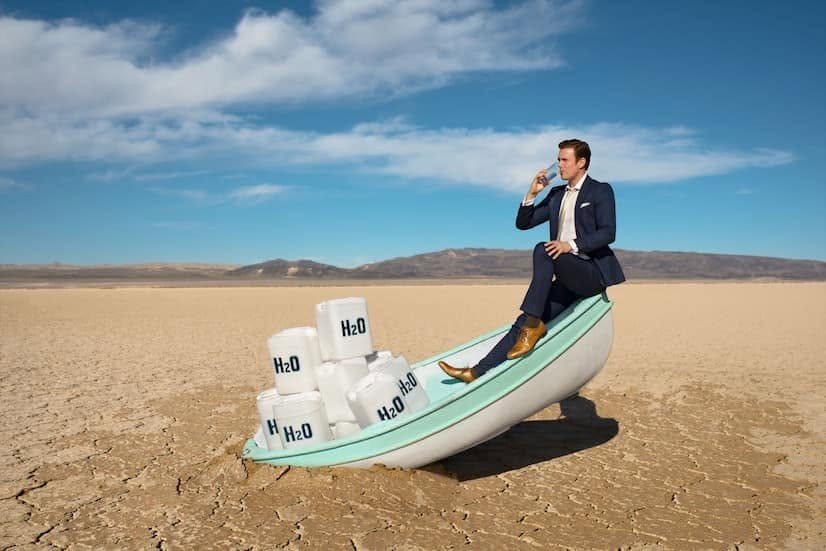
“I hope that my students will see the link between this exercise, Hardin’s idea, and the most pressing problems of our planet (climate change among them). I let them choose between two points and six points of extra credit — with one condition. The condition is that if more than 10 per cent of the class choose six points, nobody gets any points at all. In practice these extra points can be compared to water, to fuel, to grazing pasture (in Hardin’s analysis), or to any natural resource.
“According to some free-market economic theories, if everyone strives for the greatest possible personal gain, society will thrive. By that logic, the rational choice for a student is to take six points, just as the rational choice for a shepherd is to use as much of the pasture as possible. And the people who maximise their own consumption are not greedy — they are strategists.
“But when too many people choose this way, the shared resource is drained dry, and society falls into over-exploitation, water shortage and climate change.
“One possible solution looks simple: if everyone would only moderate what they consume, we would have sustainability. As many of my students put it, “If everyone chooses two points, we all get points.”
“And yet in the first eight years I ran this exercise, only one class — out of the many I taught — came in under the 10 per cent threshold. All the other classes failed.”
The author then changed the question a little for the semesters that followed — a very clever move. You can read the whole thing here:
Those two weeks in their house were the loveliest thing I had in Athens.
The only thing I want to do with them: read together.
She told me that only that English video really worked, and that she has been able to go back to work.